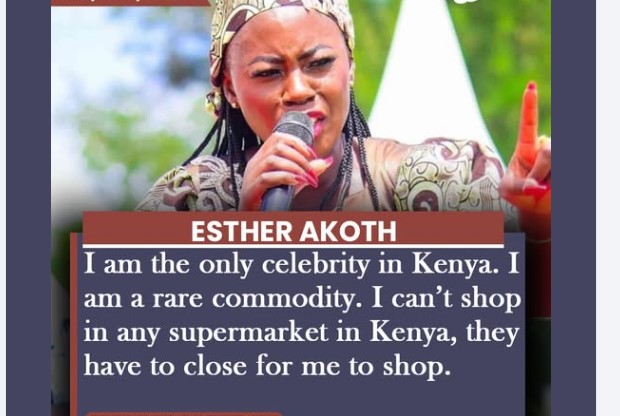
Akothee has once again stirred public debate after boldly declaring herself the only true celebrity in Kenya, describing herself as a “rare commodity” who cannot shop in supermarkets unless they are closed for her. The statement, shared with her trademark confidence, has triggered mixed reactions online, with supporters applauding her self-belief while critics question the claim.
Known for her outspoken personality and unapologetic lifestyle, Akothee has built a brand that thrives on visibility, controversy, and success. From music and business to philanthropy, she has remained a constant presence in the public eye for years. Her remarks appear to reinforce the image she has carefully cultivated: a larger-than-life figure who believes her influence sets her apart from the rest of the entertainment industry.
However, the claim has also reopened an old conversation about fame and celebrity culture in Kenya. Many social media users argue that the country has numerous high-profile figures who live relatively normal lives despite their popularity. To them, Akothee’s statement comes across as exaggerated and dismissive of other artists and public figures who have contributed significantly to the industry.
Others interpret her words differently, seeing them as a reflection of how she perceives her journey rather than a literal comparison. In a media space where branding often relies on bold statements, such remarks can be viewed as strategic, keeping her name trending and her relevance intact.
Whether seen as confidence, arrogance, or calculated publicity, Akothee’s declaration has succeeded in doing what it often does: commanding attention. It highlights the power of personal branding in modern celebrity culture and shows how a single statement can dominate conversations far beyond its original context.