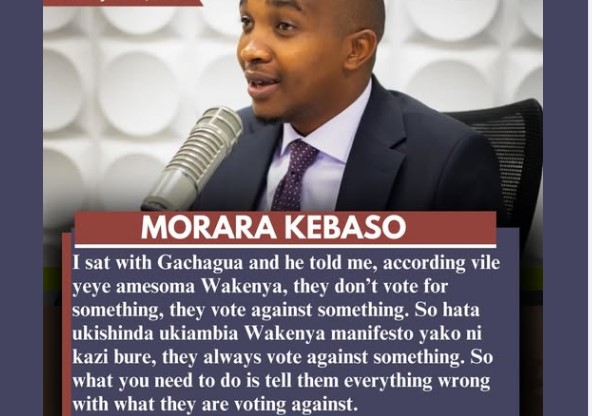
Political activist Morara Kebaso has sparked debate after sharing details of a conversation he claims to have had with former Deputy President Rigathi Gachagua.
According to Morara, Gachagua told him that, based on his reading of Kenyan voters, elections are often decided not by what people are voting for, but by what they are voting against.
“I sat with Gachagua and he told me, according to how he has studied Kenyans, they don’t vote for something, they vote against something. So even if you win by telling Kenyans your manifesto, it is useless work. What you need to do is tell them everything wrong with what they are voting against,” Morara said.
The remarks have triggered mixed reactions, with some agreeing that Kenyan politics has historically been driven by protest votes and anti-incumbency waves, while others argue that voters are increasingly issue-based and more focused on policy and economic performance.
Kenya’s electoral history shows moments where public frustration, economic hardship, or dissatisfaction with leadership has significantly influenced voting patterns. However, analysts also note that manifestos, coalitions, ethnic alignments, and grassroots mobilization continue to play important roles in shaping outcomes.
Gachagua has not publicly confirmed or denied the alleged remarks. The statement nevertheless adds to ongoing conversations about voter behavior and campaign strategy as political leaders begin positioning themselves ahead of the next general election.