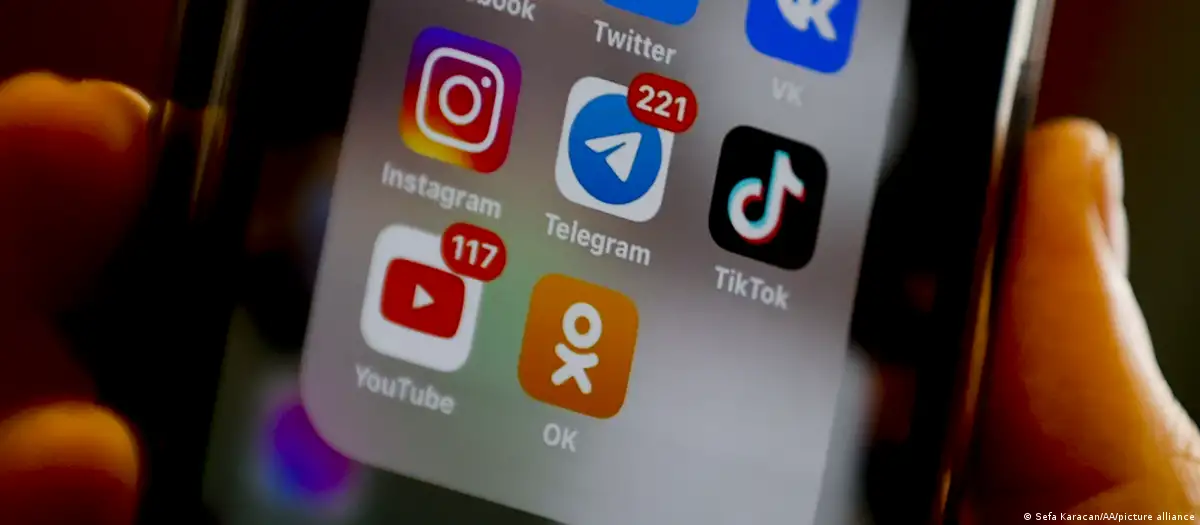
Russia’s tightening control over the internet has entered a new phase after the country’s communications watchdog, Roskomnadzor, removed “youtube.com” from its national DNS infrastructure. As a result, users attempting to access YouTube directly — without using a Virtual Private Network (VPN) — can no longer have the domain translated into its corresponding IP address. In practical terms, this makes the video platform inaccessible for many users inside Russia.
The move goes beyond YouTube. Reports indicate that the WhatsApp domain has also disappeared from state-controlled servers, and authorities have intensified pressure on Telegram. Analysts say this reflects a broader strategy to assert control over digital platforms that operate beyond direct government oversight.
To understand the technical shift, it helps to think of DNS (Domain Name System) servers as the internet’s phone book. When users type a web address like youtube.com, DNS servers translate that name into a numerical IP address that computers use to locate each other. According to experts, Russia’s system is more accurately described as NDNS — the National Domain Name System — introduced under the country’s Sovereign Internet Law. Telecommunications providers are required to use this centralized system rather than international domain registrars, enabling authorities to control access to websites at a national level.
Previously, Roskomnadzor relied heavily on Deep Packet Inspection (DPI), a technology that filters and analyzes internet traffic. DPI allowed regulators to slow down certain platforms without blocking them outright. Many Russian users had experienced YouTube videos loading slowly or failing to play, even though the platform technically remained available. Now, by removing domains from the national DNS system, authorities appear to be implementing a more direct and comprehensive restriction.
VPNs have become a crucial tool for many users. By encrypting internet traffic and routing it through servers outside the country, VPNs can help bypass geo-blocking and censorship. However, even VPN users report unstable connections and slow speeds. Some believe this is due to government countermeasures, while others point to the limitations of free VPN services.
Legal risks add another layer of complexity. A recent law in Russia introduced fines for searching for so-called “extremist material” online and for using VPN services to access restricted content. Although YouTube has not been officially designated as an “undesirable organization,” authorities frequently accuse it of distributing prohibited material. Courts have also fined Telegram for refusing to delete content deemed unlawful under Russian legislation.
Experts warn that centralizing internet infrastructure through NDNS could fundamentally reshape Russia’s digital landscape. If access to global platforms continues to shrink and alternative services are blocked, Russia may gradually develop an isolated digital ecosystem distinct from the broader global internet. Such a shift would raise concerns not only about access to information, but also about cybersecurity. Specialists caution that users blocked from legitimate websites could be redirected to fraudulent pages designed to harvest personal data, passwords, or financial information.
The broader implications extend beyond technology. The increasing use of DNS manipulation and legal enforcement reflects a state-driven effort to control narratives, regulate information flows, and limit external influence. As restrictions expand from one platform to another, many observers fear that Russia could be moving toward a more segmented and state-controlled version of the internet — one that differs significantly from the open, interconnected system most of the world relies on.