A dispute between Machakos Governor Wavinya Ndeti and comedian Kioko has drawn attention in Kenyan media after the latter claimed that he was not paid for services rendered to the county government. According to reports, Kioko alleges that he collaborated with the Machakos County administration on an event or project but has yet to receive the agreed-upon payment.
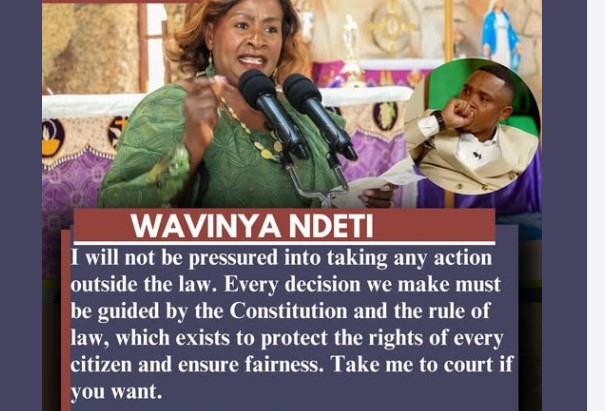
Governor Wavinya Ndeti responded firmly to the allegations, emphasizing her commitment to legality and due process. She told Kioko that she would not be pressured into taking any action outside the boundaries of the law. “Every decision we make must be guided by the Constitution and the rule of law, which exists to protect the rights of every citizen and ensure fairness. Take me to court if you want,” she stated.
The governor’s response highlights the importance of following formal legal procedures in disputes involving public funds. While entertainers and contractors are entitled to timely compensation for services rendered, public officials are bound by regulations that govern the use of county resources. In Kenya, payments for services to county governments must often go through proper procurement and verification processes to ensure transparency and accountability.
The disagreement has sparked debate among the public about the balance between respecting legal procedures and ensuring that citizens and private individuals are not disadvantaged. Supporters of Kioko argue that entertainers and contractors frequently face delays in payment when working with government institutions, sometimes jeopardizing their livelihoods. Conversely, supporters of the governor emphasize that adherence to the law is essential to prevent misuse of public funds and ensure that taxpayer money is handled responsibly.
This dispute also underscores the broader challenges faced in public-private collaborations within county governments. While partnerships with entertainers, artists, and service providers can enhance public engagement and cultural initiatives, such collaborations must be managed transparently to avoid misunderstandings or allegations of misconduct.
Ultimately, the matter between Wavinya Ndeti and Kioko is likely to be resolved through legal channels if the comedian pursues the matter in court. The situation serves as a reminder of the delicate balance between contractual obligations, public accountability, and adherence to constitutional and legal frameworks in Kenya. Both parties’ rights and responsibilities will likely be determined by formal adjudication, reinforcing the principle that disputes involving public institutions must be settled according to the rule of law.