Former Malindi MP Aisha Jumwa, popularly known as Shangazi wa Kiuno, has sparked fresh political debate after openly criticizing the United Democratic Alliance (UDA) and hinting at the formation of a new political outfit. Speaking with visible frustration, Jumwa accused national parties of consistently using leaders from the Coast region without offering them meaningful political inclusion or long-term empowerment.
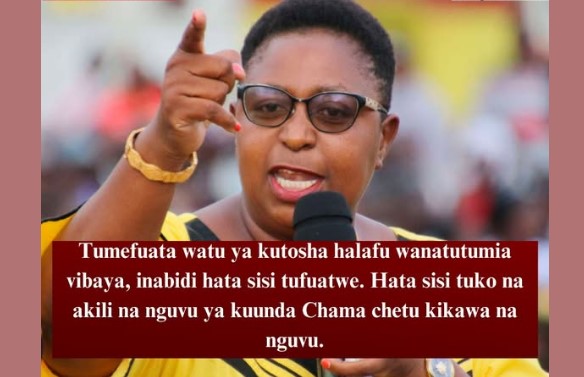
Jumwa lamented that Coast politicians have always mobilized large voter numbers for major parties, only to be sidelined once elections are over. “Tumefuata watu ya kutosha halafu wanatutumia vibaya. Inabidi hata sisi tufuatwe,” she said, insisting that the region deserves respect, recognition, and negotiation power equal to other strong voting blocs in the country. Her remarks reflect long-standing grievances in the Coast, where many leaders feel national parties only engage the region for votes but fail to deliver development or influential positions.
She emphasized that Coast leaders are not politically naïve and possess both the capacity and the intelligence to form a strong party of their own. “Hata sisi tuko na akili na nguvu ya kuunda chama chetu kikawa na nguvu,” Jumwa declared, signalling that the era of political dependence may be coming to an end. Her call resonates with a growing sentiment that regions with distinct political identities—such as Nyanza, Central, and Rift Valley—have benefited from stronger bargaining power through local unity, something the Coast has struggled to achieve.
Jumwa’s statements have drawn mixed reactions. Supporters applauded her courage, arguing that the Coast has historically been neglected despite its economic importance, especially in tourism and port operations. They believe a regional political movement could give coastal residents a louder voice and leverage in national decision-making. Critics, however, accuse her of opportunism, arguing that her frustrations stem from shifting political fortunes rather than genuine commitment to regional empowerment.
Regardless of the political motivations behind her comments, Jumwa’s outburst has reopened a critical conversation about regional representation, political equity, and the need for stronger homegrown leadership in the Coast. Her remarks could mark the beginning of a realignment as coastal leaders reconsider their alliances ahead of 2027. Whether her call materializes into a unified regional party or remains political rhetoric, it has undeniably shaken the coastal political landscape and signaled a new wave of assertiveness from leaders in the region.