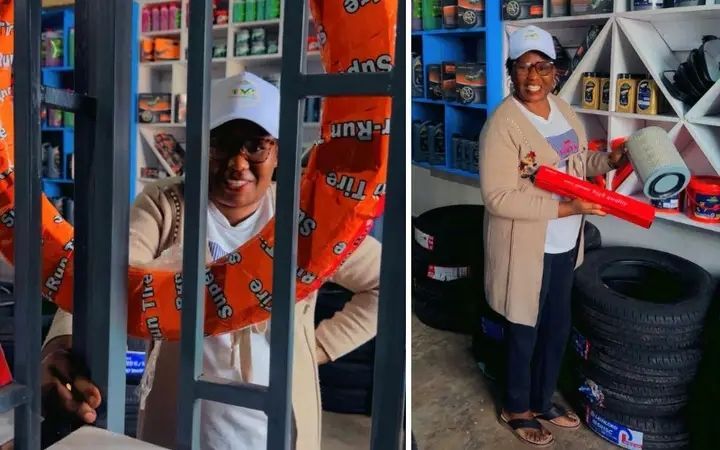
Reports that former Meru Governor Kawira Mwangaza is now hawking motorbike spare parts in Meru town after her impeachment have stirred intense reactions across social media and political circles.
Mwangaza, who rose to prominence through grassroots mobilization and an independent political wave, faced a turbulent tenure marked by conflicts with members of the Meru County Assembly. Her impeachment became one of the most closely watched political battles in the region, symbolizing the fragile relationship between county executives and assemblies in Kenya’s devolved system.
Now, claims that she has returned to small-scale trade paint a striking contrast to the high-profile office she once held. For supporters, the image of a former governor engaging in everyday hustles is seen as resilience — proof that leadership positions do not define a person’s worth or survival. They argue that there is dignity in honest work, regardless of past titles.
Critics, however, interpret the development differently, viewing it as a political fall from grace. In Kenya’s often status-driven political culture, former office holders are typically expected to maintain a certain public image. Seeing a former governor in ordinary business challenges those assumptions.
Beyond the politics, the situation raises broader questions about life after public office. Not all leaders maintain influence or wealth once they leave power. Some reintegrate into private life, business, or community activities. In fact, engaging in trade or entrepreneurship is not unusual in a country where many citizens depend on small businesses for survival.
Whether symbolic of resilience or political decline, the story reflects the unpredictable nature of political careers. Power can be temporary, but livelihood must continue. In the end, leadership may come and go, but the need to work and provide remains constant.