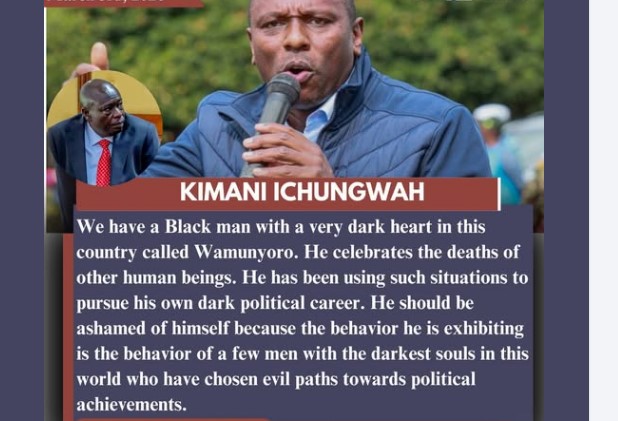
Remarks attributed to Kimani Ichungwah have sparked debate after he strongly criticized an individual referred to as “Wamunyoro,” accusing him of celebrating deaths and exploiting tragedy for political gain. The statement, which described the target in harsh and deeply emotional terms, reflects the increasingly confrontational tone that has come to characterize sections of Kenya’s political discourse.
In his remarks, Ichungwah portrays the unnamed figure as someone who allegedly uses moments of national grief to advance personal political ambitions. Such accusations are serious, particularly in a country where public mourning and funeral ceremonies carry deep cultural and communal significance. Suggesting that someone would manipulate death for political mileage strikes at the moral core of society, where respect for the departed and their families is considered sacred.
However, the language used in the criticism has also raised concerns. Political disagreements are common in democratic systems, but when rhetoric becomes intensely personal or emotionally charged, it risks deepening divisions rather than addressing substantive issues. Public leaders wield significant influence, and their words can either calm tensions or inflame them. In multi-ethnic and politically vibrant societies like Kenya, responsible communication is essential to maintaining unity.
This episode highlights a broader challenge within Kenyan politics: the tendency for disputes to shift from policy debates to personal attacks. While accountability and criticism are fundamental components of democracy, they are most effective when grounded in evidence, civility, and a focus on issues rather than character condemnation.
Ultimately, moments of tragedy should encourage reflection, empathy, and national solidarity. Political competition is inevitable, but it should not overshadow the shared human values that bind communities together. Leaders on all sides bear the responsibility of ensuring that public discourse remains firm yet respectful, passionate yet constructive.