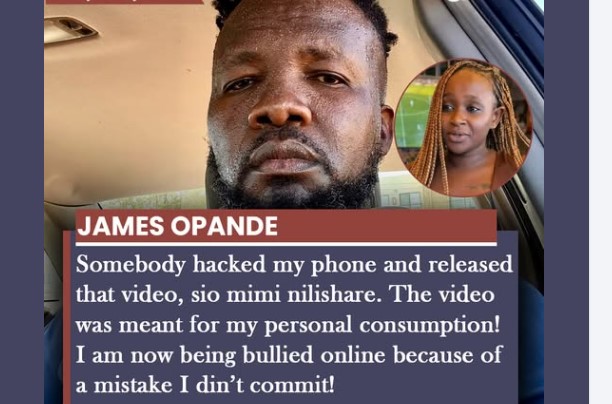
James Opande has come out strongly to defend himself following the circulation of a video that sparked online backlash, insisting that he neither shared it nor intended it for public viewing. In an emotional response, Opande claimed that his phone was hacked and the content released without his consent.
“Somebody hacked my phone and released that video, sio mimi nilishare,” Opande said, distancing himself from the incident. He further explained that the video was private and never meant for public consumption. According to him, the situation has spiraled into online bullying over something he says he did not do.
Opande expressed frustration at being judged and attacked over what he described as a violation of his privacy. “The video was meant for my personal consumption. I am now being bullied online because of a mistake I didn’t commit,” he added, calling for fairness and understanding from the public.
The incident has reignited conversations around digital privacy, cybercrime, and the rapid spread of content on social media without verification. Supporters argue that if Opande’s claims are true, then he is a victim of hacking and cyberbullying, not misconduct. Others, however, remain skeptical, noting that similar explanations have been used in past scandals involving leaked content.
As public debate continues, the case highlights the growing risks associated with digital security and the severe consequences of online mob judgment. The truth behind the video may ultimately depend on proper investigations rather than social media verdicts.


