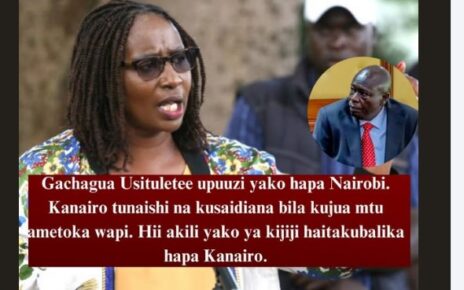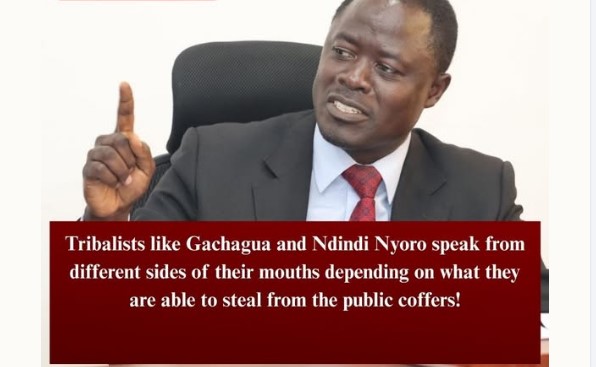
Homa Bay Town MP Peter Kaluma has ignited fresh political debate after launching a sharp attack on Deputy President Rigathi Gachagua and Kiharu MP Ndindi Nyoro, accusing them of hypocrisy and tribal-based politics. According to Kaluma, the two leaders often shift their political positions depending on what serves their interests, particularly when it comes to access to public resources.
Kaluma argued that such conduct is harmful to the country’s democratic fabric, noting that leaders who speak “from different sides of their mouths” erode public trust. He claimed that politics driven by personal or regional gain, rather than national interest, continues to fuel division and inequality in Kenya. In his view, leaders should remain consistent in their principles and put the needs of all Kenyans above ethnic or political calculations.
The MP further warned that tribal politics remains one of the biggest obstacles to national unity and development. He said that when leaders promote narratives that benefit a few at the expense of the wider population, they weaken institutions and encourage corruption. Kaluma insisted that public coffers should be used to uplift citizens equally, not as tools for rewarding political loyalty or ethnic backing.
His remarks come amid heightened political tensions, with leaders increasingly trading accusations as they position themselves for future contests. While supporters of Gachagua and Nyoro have previously defended them as effective leaders focused on development, critics like Kaluma argue that their rhetoric often changes depending on political convenience.
As Kenya continues to grapple with issues of corruption, inequality, and ethnic polarization, Kaluma’s comments have reopened an important conversation about leadership integrity. The debate underscores a growing demand from citizens for leaders who are principled, transparent, and committed to national unity rather than self-interest.