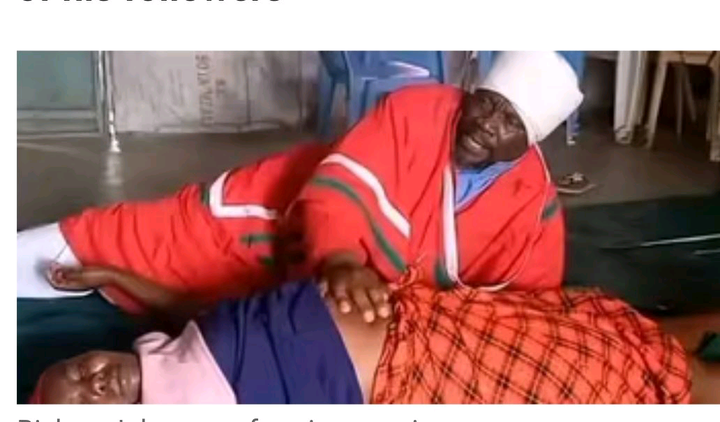
A recent video featuring Pastor Johannah has ignited heated debate and public concern after a woman, identified as Wanjiru, came forward to share her disturbing encounter with the preacher.
Speaking on a popular YouTube channel run by a well-known media personality, Wanjiru narrated her ordeal, shedding light on the troubling events that led to the now-viral incident.
Contrary to public assumptions, Wanjiru clarified that she was not a member of Pastor Johannah’s church. Instead, she sought his help through a friend, hoping to find solutions to her troubled marriage.
Wanjiru revealed that she had been enduring serious challenges at home, which pushed her to explore unconventional avenues for relief. When she finally met the pastor, she was informed that a payment of at least Ksh 3,000 was required for a “deliverance session.”
Though hesitant, Wanjiru’s friend encouraged her to proceed, even helping cover the balance of the fee. The session began with a worship service that involved five songs, but it ended in a shocking and deeply unsettling experience.
According to Wanjiru, she lost consciousness during the session and later discovered that Pastor Johannah had allegedly taken advantage of her. To make matters worse, she found out that the incident had been secretly recorded, with the footage now circulating widely on social media platforms.
The revelation left Wanjiru devastated and traumatized, never imagining that her search for help would expose her to such humiliation.
Her testimony has since fueled broader conversations about consent, accountability, and ethical responsibility within religious spaces. Many are now questioning the unchecked power some spiritual leaders wield over vulnerable individuals seeking guidance.
The virality of the video underscores the urgent need to scrutinize the actions of church leaders while safeguarding the dignity and rights of those who turn to them in times of need.
As the story continues to unfold, Wanjiru’s bravery in speaking out serves as a reminder of the importance of amplifying marginalized voices and holding authority figures accountable. Her account is not just a personal tragedy—it is a sobering reflection on the intersection of faith, power, and exploitation.