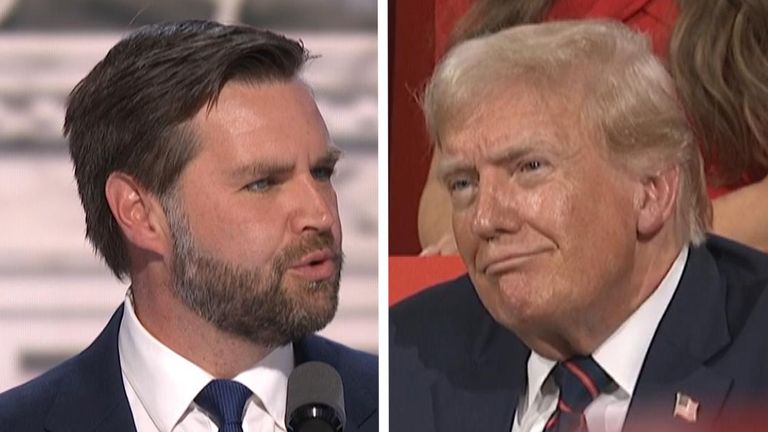
The health and well-being of any sitting president often becomes a subject of great public interest, especially when questions arise about their ability to discharge official duties. In the case of President J. Trump, recent discussions have drawn attention after Vice President JD Vance addressed concerns about the President’s condition.
Vance, who has positioned himself as a loyal deputy and strong supporter of the administration’s policies, reassured the public that the government remains stable regardless of speculation. While he did not confirm any major health issues, his statement highlighted his preparedness to step into the role of president if circumstances required. This is in line with constitutional provisions that grant the vice president the responsibility of succeeding the head of state should he become incapacitated or unable to lead.
The statement sparked mixed reactions across the political divide. Supporters of Trump dismissed the concerns as unnecessary rumors aimed at destabilizing confidence in his leadership. On the other hand, critics viewed Vance’s remarks as a subtle acknowledgment of the uncertainties surrounding Trump’s age and fitness for office.
Political analysts argue that such declarations by a vice president serve two purposes: first, to reassure the nation that governance will not be interrupted under any circumstance; and second, to demonstrate readiness to maintain continuity of leadership. History has shown that smooth transitions are vital for political stability, and Vance’s words appear to echo that sentiment.
Ultimately, the question “Is President Trump okay?” remains unanswered in concrete terms. What is clear, however, is that the Vice President has openly expressed his confidence in his ability to lead should duty call. As speculation continues, Americans will be watching closely, not only for signs of the President’s well-being but also for how the administration manages public confidence moving forward.