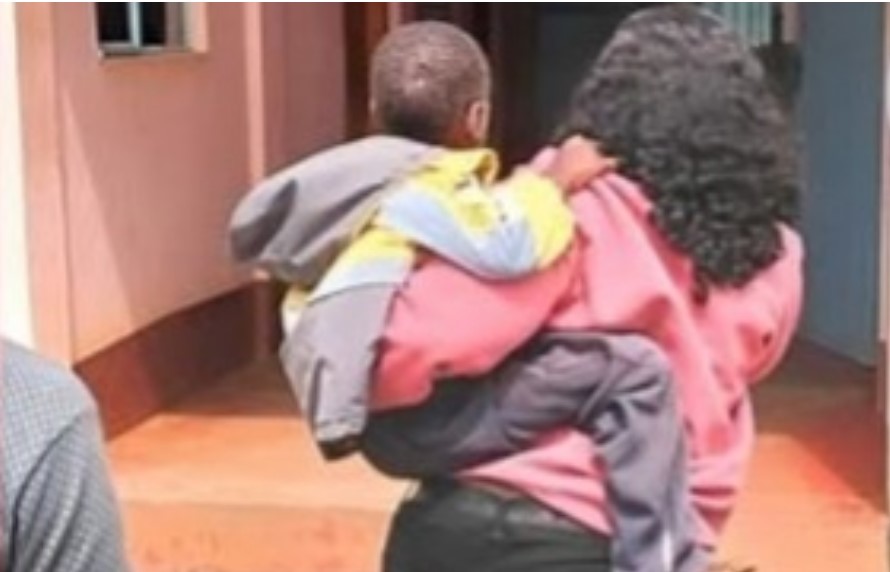
A nine-year-old boy from Mwanganthia Ward in Imenti Central, Meru County, has been rescued after spending seven years confined in a cage at his grandparents’ home in the Nduruma area.
The child, identified as Mwiti, was found living in poor conditions after his story went viral on social media. A TikToker known as Supuu O Mioro visited the homestead, raised alarm over the boy’s situation, and mobilised well-wishers to facilitate his rescue.
According to Mioro, Mwiti was abandoned by his mother at the age of one. His grandparents, Stella Kathure and Joseph Murungi, took him in and attempted to raise him despite facing financial and social challenges.
When Mwiti was about two years old, he reportedly began showing unusual behaviour, including aggression and inability to communicate verbally. Fearing for his safety and lacking proper guidance or support, his grandmother constructed a small enclosure to confine him. This was later replaced with a wire-mesh cage resembling a poultry structure, where the boy lived for several years and was fed through a small opening.
Following his rescue, Mwiti was taken to a health facility for medical evaluation. Doctors established that he does not suffer from a serious medical condition. Instead, his challenges were attributed to neglect and lack of appropriate care and stimulation. Medical personnel described him as active, friendly, and curious, though unable to speak.
Plans are now underway to transfer Mwiti to Nairobi for further assessment. He is expected to be placed at Shalom Children’s Home, where he will receive care, protection, therapy, and life skills training. The facility relies on support from well-wishers to meet the child’s ongoing needs.
The incident has reignited concerns about the treatment of children with disabilities, particularly in rural areas, with activists calling for stronger community awareness, early intervention, and better access to social support services to prevent similar cases.