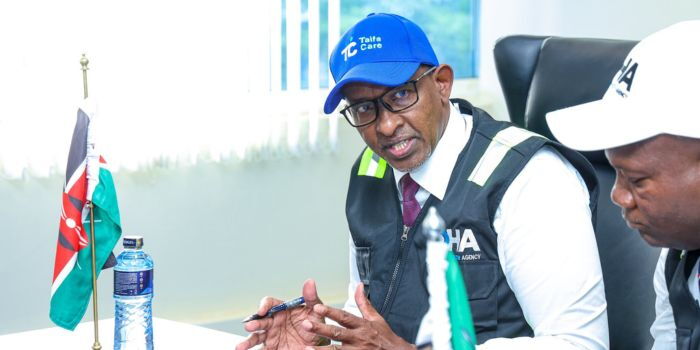
Health Cabinet Secretary Aden Duale has revealed that Ksh11 billion in Social Health Authority (SHA) funds remains unaccounted for after an AI-powered fraud detection system uncovered widespread manipulation of medical claims by health facilities across the country.
Appearing before a parliamentary committee on January 28, Duale said the losses occurred within just six months, largely due to rejected claims flagged for fraud, inflated billing, and falsified medical records.
According to Duale, several hospitals that previously defrauded the now-defunct National Hospital Insurance Fund (NHIF) were again implicated following the rollout of SHA.
One of the most alarming findings involved private hospitals reporting impossible medical scenarios, including facilities claiming that 100 per cent of deliveries were done through caesarean section, far above the World Health Organization’s recommended 10–15 per cent rate.
“There are facilities in our country that have reported that 100 per cent of the mothers who delivered underwent C-section,” Duale told MPs.
In Tharaka Nithi County, one private hospital claimed all 500 mothers who delivered at the facility had caesarean births, prompting automatic rejection of the claims by the system.
Further concerns were raised after Auditor General Nancy Gathungu disclosed that the SHA system is controlled by a private consortium allegedly linked to an Indian firm, despite costing Ksh104 billion and not being fully owned by the Kenyan government. The consortium is reportedly set to collect about Ksh11 billion annually from contributions and hospital claims.
SHA has since issued a 15-day ultimatum to hospitals to explain Ksh3 billion worth of flagged claims lacking proper documentation or suspected to be fraudulent before any payments are processed.
The audit also uncovered cases where healthcare workers registered themselves as fake patients to generate claims, while some facilities reported periods where only caesarean births occurred, with zero natural deliveries.
Investigators further found that many claim forms were filled out by a single individual using one pen and handwriting, instead of the legally required signatures from patients, doctors, and hospital administrators.
“Where SHA finds that claim forms are filled by one person, one handwriting, one pen, that is an automatic rejection,” Duale said.
Hospitals were also cited for submitting maternity claims without birth notification documents, a mandatory requirement, leading to billions of shillings in rejected payments.
The AI system detected additional fraud patterns, including ghost patients visiting facilities up to ten times a day to inflate capitation payments. In Kwale County, one individual was found to have registered 381 dependent children under a single SHA account, a case now under investigation by the Directorate of Criminal Investigations (DCI).
The Ministry of Health says it has paid Ksh11.4 billion to hospitals since SHA was introduced, even as private hospitals under RUPHA claim they are owed Ksh76 billion.
Duale defended the SHA fraud detection system, noting that it flags anomalies in real time, including cases where patients were claimed to have undergone 10 dialysis sessions, despite SHA only covering two sessions under medical guidelines.