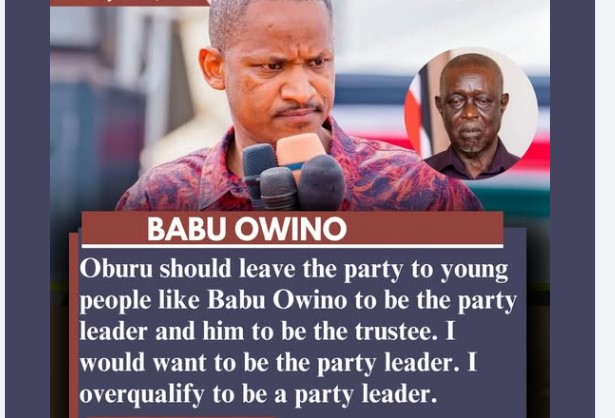
In a bold declaration that has drawn attention across Kenyan political circles, Babu Owino, the outspoken Member of Parliament, recently suggested that senior party figures such as Oburu Oginga should step aside and allow younger leaders to take the helm. Owino argued that the next generation of politicians, including himself, is better positioned to lead the party into the future, while seasoned leaders could serve in advisory roles as trustees.
According to Owino, the party requires fresh energy, innovative ideas, and a leadership style that resonates with Kenya’s youth. By suggesting that he “overqualifies” to be party leader, he positioned himself as a capable figure ready to assume greater responsibility, emphasizing both his experience and his popularity among younger voters. The statement reflects a growing sentiment in Kenyan politics, where youth leaders are increasingly calling for more influence in decision-making processes traditionally dominated by older politicians.
Oburu Oginga, a veteran legislator and influential political strategist, has been a central figure in shaping party strategies for decades. While his experience is widely respected, Owino’s remarks highlight a generational tension that is emerging within political parties across Kenya. This tension raises broader questions about succession planning, mentorship, and the role of young leaders in revitalizing party structures.
The implications of Owino’s statement are significant. By advocating for a transition of leadership to younger members while relegating older leaders to trustee roles, he is signaling a desire for a more dynamic political landscape. At the same time, the proposal underscores the challenge of balancing respect for seasoned politicians with the aspirations of ambitious youth who seek to modernize party operations and appeal to a changing electorate.
Public reaction to Owino’s remarks has been mixed. Supporters of youth empowerment applaud the call for fresh leadership and the recognition that younger politicians bring new perspectives to the table. Critics, however, caution that political experience should not be undervalued, warning that sidelining veteran leaders could lead to internal friction and destabilize party cohesion.
Ultimately, Babu Owino’s statement reflects the ongoing debate about the future of political leadership in Kenya. As parties grapple with generational shifts, the conversation around youth participation, mentorship, and leadership readiness will continue to shape both party politics and the broader national discourse. Whether the party will embrace such a transition remains to be seen, but the remarks certainly highlight the ambitions of a young leader eager to redefine political leadership in Kenya.