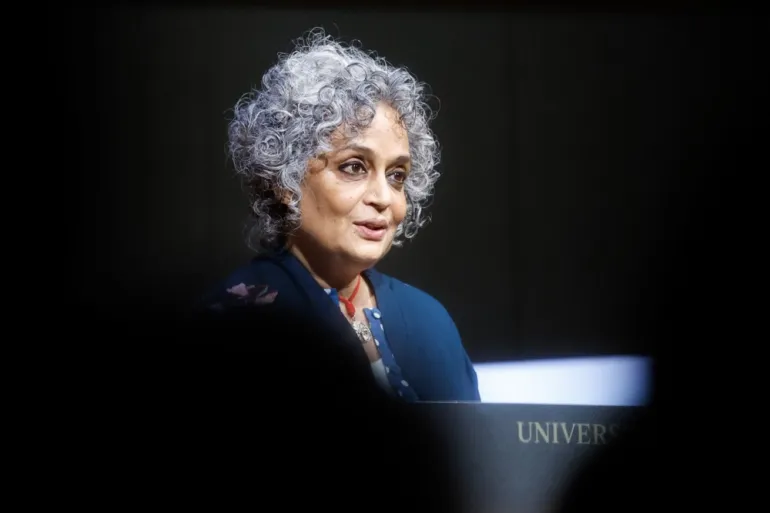
Indian author Arundhati Roy has withdrawn from the Berlin International Film Festival (Berlinale), citing what she described as “unconscionable statements” by members of the festival’s jury regarding Israel’s war in Gaza. Her decision has added a new layer of controversy to the prominent cultural event, which runs from February 12 to 22 in Berlin.
Writing in the Indian publication The Wire, Roy said she was “shocked and disgusted” by remarks made during a festival panel discussion. In particular, she criticized comments attributed to jury chair Wim Wenders, who suggested that filmmakers should stay out of politics and serve as a counterweight to political actors rather than engage directly in political debates. Roy described such statements as “jaw-dropping,” arguing that discouraging political engagement in art risks silencing conversations about what she characterized as grave human rights violations in Gaza.
Roy, author of the Booker Prize–winning novel The God of Small Things, had been scheduled to attend the festival for a screening of her 1989 film In Which Annie Gives It Those Ones, selected for the Berlinale Classics section. However, she announced that she could not participate under the current circumstances, stating that artists and cultural workers should use their platforms to speak out against war and injustice.
During the panel discussion that sparked the controversy, journalists asked jury members about Germany’s support for Israel and allegations of “selective treatment” of human rights issues. In addition to Wenders’ remarks, Polish producer Ewa Puszczynska reportedly said it was unfair to expect filmmakers to be responsible for government foreign policy decisions and noted that many conflicts around the world receive less attention.
Germany’s role in the conflict has also been part of the broader debate. As one of Israel’s largest arms suppliers after the United States, Germany has faced criticism from pro-Palestinian activists and some cultural figures. In 2024, more than 500 international artists and cultural workers called for a boycott of German-funded cultural institutions, alleging that measures taken by authorities and institutions suppress expressions of solidarity with Palestinians. Organizers of that initiative claimed that some institutions were monitoring public statements and social media activity for political positions related to the conflict.
Roy’s withdrawal highlights ongoing tensions between art and politics, particularly at international cultural events. While some argue that festivals should remain neutral spaces focused solely on artistic merit, others maintain that art has always been intertwined with social and political realities. The incident underscores how global conflicts increasingly reverberate through cultural platforms, forcing artists, institutions, and audiences alike to confront difficult questions about responsibility, free expression, and the role of creative work in times of war.