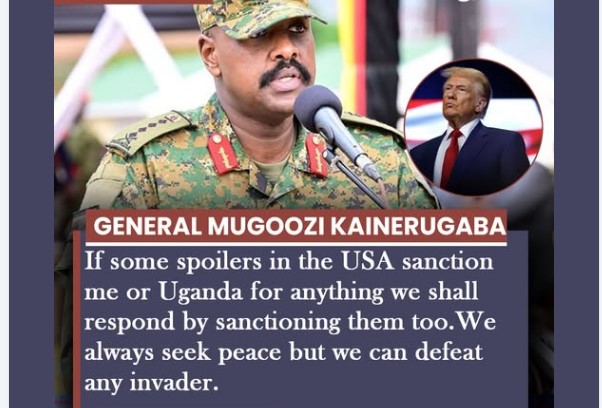
Uganda’s Chief of Defence Forces, General Muhoozi Kainerugaba, has sparked international debate after issuing a defiant warning directed at the United States over possible sanctions. In a strongly worded statement, Muhoozi said that if individuals or authorities in the US move to sanction him or Uganda, the country would respond in kind by imposing its own sanctions.
The general framed his remarks around national sovereignty and self‑defence, insisting that Uganda does not seek conflict but will not hesitate to respond to external pressure. He maintained that while Uganda prefers peaceful engagement with global partners, it retains the capacity to defend itself against any form of aggression or interference.
Muhoozi’s comments come at a time of heightened sensitivity around international relations, human rights concerns, and the role of the military in political discourse. Critics argue that such rhetoric risks escalating diplomatic tensions and undermining Uganda’s long‑standing relationships with key international partners. Others see the remarks as a show of strength aimed at projecting independence and resistance to foreign influence.
The statement has drawn mixed reactions both locally and internationally, with analysts warning that confrontational language between senior military figures and foreign governments could have economic and diplomatic consequences. As discussions continue, the episode highlights the delicate balance between asserting national pride and maintaini