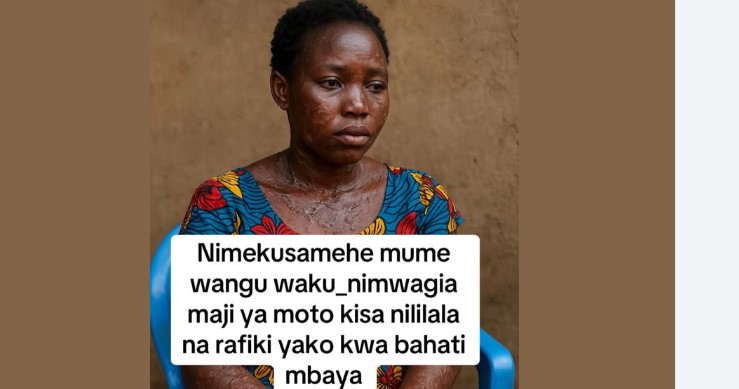
A dramatic story recently surfaced online, leaving many people in shock. A woman openly declared, “Nimekusamehe mume wangu kwa kunimwagia maji moto, kisa nililala na rafiki yako bahati mbaya” — loosely translated as, “I forgive you, my husband, for pouring hot water on me, because I mistakenly slept with your friend.”
This statement has stirred mixed emotions and sparked intense debate about love, forgiveness, and betrayal in relationships. On one hand, the woman’s words reflect remarkable forgiveness, even in the face of physical harm. On the other, her confession of infidelity — described as a “mistake” — complicates the situation, raising questions about trust, respect, and accountability in marriage.
The incident highlights the fragile nature of modern relationships, where emotions often run high and conflicts can escalate into violence. Infidelity remains one of the most painful betrayals in a marriage, and many partners struggle to cope with the hurt. For some, anger manifests in destructive ways, while others, like this woman, choose forgiveness — even when they themselves carry part of the blame.
Culturally, the story underscores the imbalance that often exists in handling marital conflict. Violence, especially in response to betrayal, is never a justified solution, yet it continues to be a common reaction in many households. Equally, brushing off infidelity as a “mistake” raises questions about how couples value loyalty and honesty in their unions.
This woman’s confession is more than just a personal story; it is a reflection of the challenges facing marriages today. It shows how love, pain, betrayal, and forgiveness can coexist in the most complicated ways. While her words may seem shocking, they serve as a reminder that true healing in relationships requires more than forgiveness — it calls for accountability, respect, and a genuine commitment to change from both partners.