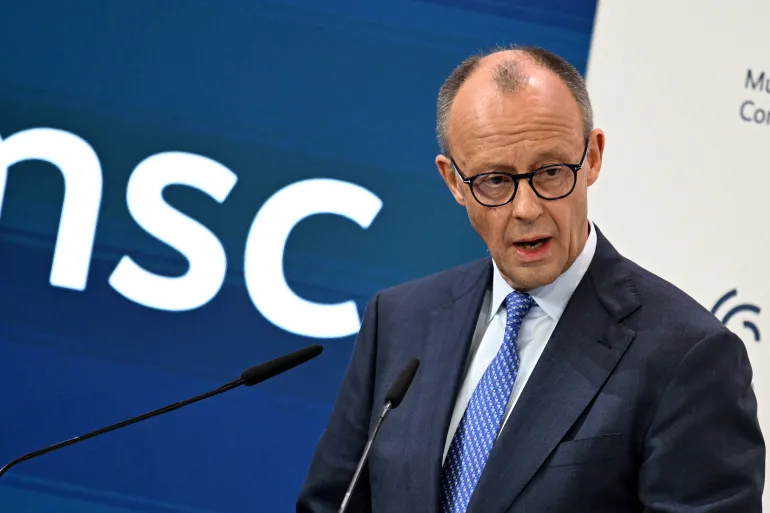
At the 62nd Munich Security Conferenceerman security conference”], German Chancellor Friedrich Merz called on the United States and Europe to “repair and revive transatlantic trust together.” He highlighted growing divisions between Washington and European capitals, noting that NATO remains a shared strategic advantage for both sides. Merz emphasized that in an era of great power rivalry, neither Europe nor the U.S. can act alone, and renewed collaboration is essential to ensure security and stability.
Merz distinguished European priorities from U.S. domestic politics, particularly the Trump-era “Make America Great Again” movement, stressing that Europe should maintain its own political path while remaining fully integrated into transatlantic security frameworks. He also confirmed talks with French President Emmanuel Macron on a potential European nuclear deterrence initiative, reflecting concerns over Europe’s long-term strategic autonomy amid shifting U.S. commitments.
The chancellor’s remarks contrasted with previous U.S. rhetoric criticizing European defense spending and political direction, emphasizing dialogue, cooperation, and shared responsibility as the foundation for a resilient transatlantic partnership. By advocating trust, strategic coordination, and strengthened European capabilities, Merz outlined a vision for a durable, forward-looking alliance capable of addressing global challenges together.