The United States has issued a stern warning to its NATO partners following a wave of Western recognition of the State of Palestine, a move that has ignited fierce political debate in Washington and rattled transatlantic relations.
U.S. Lawmakers Lead Backlash
Florida Representative Randy Fine was among the most vocal critics, blasting European nations for what he described as aligning with forces hostile to Israel.
“We must have a serious discussion about whether these countries are truly our allies and whether the United States should continue to be bound by NATO obligations when our supposed partners are undermining our closest friend in the Middle East,” Fine declared.
The backlash followed a landmark announcement on 21 September 2025 by British Prime Minister Keir Starmer, who confirmed that the United Kingdom had officially recognized the State of Palestine.
The UK’s decision sparked a domino effect, with Canada, Australia, Portugal, Ireland, Spain, and several EU nations following suit, marking the first time multiple Western powers simultaneously extended full diplomatic recognition to Palestine.
Israel’s Strong Response
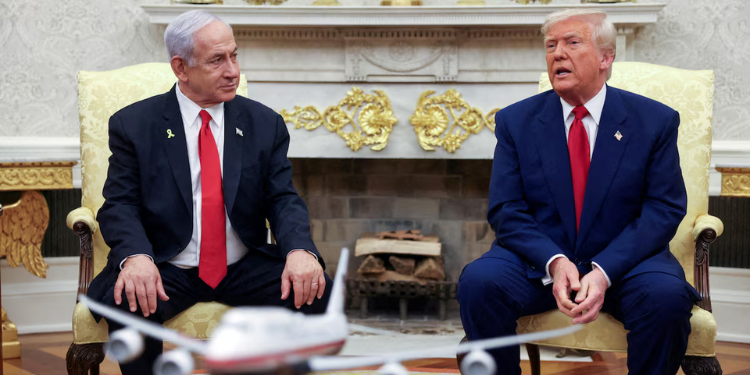
Israel reacted with outrage. Prime Minister Benjamin Netanyahu condemned the recognitions as a “historic mistake” and a “reward for terrorism.”
Netanyahu warned that unilateral recognition would undermine efforts to secure the release of hostages held by Hamas and complicate security operations in the region.
The Israeli Foreign Ministry summoned ambassadors from all recognizing states, while Defense Minister Yoav Gallant announced a review of intelligence-sharing and defense partnerships with certain European countries, citing a “fundamental breakdown of trust.”
European leaders, however, defended their decision, arguing that recognition is essential to keeping the two-state solution alive and avoiding the permanent collapse of peace prospects.
NATO Under Pressure
In Washington, the issue has quickly escalated into a divisive debate. While the White House has not formally backed calls to leave NATO, several Republican and conservative Democratic lawmakers are pressing for a reassessment of America’s role in the alliance.
They argue that NATO risks losing its unity if members act independently on matters as sensitive as Middle East diplomacy. Some even called for suspending military aid to countries that recognized Palestine until their commitments to counterterrorism and defense cooperation are clarified.
What’s at Stake for Europe
For Europe, the prospect of a reduced U.S. role in NATO presents serious security risks. The U.S. remains the backbone of the alliance, providing nuclear deterrence, rapid deployment capabilities, and advanced intelligence systems.
Without American support, European nations would face pressure to drastically increase defense spending and coordination—an outcome that could strain already fragile economies.