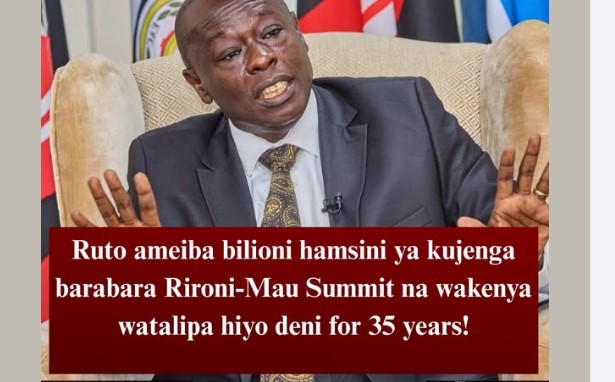
Deputy President Rigathi Gachagua has leveled a serious accusation against President William Ruto, claiming that the president misappropriated KSh 50 billion allocated for the construction of the Rironi-Mau Summit Road. Speaking during a recent rally, Gachagua stated, “Ruto ameiba bilioni hamsini ya kujenga barabara Rironi-Mau Summit na wakenya watalipa hiyo deni for 35 years!”
Gachagua alleged that the funds, originally intended to improve critical infrastructure and facilitate trade and transport, have been mishandled, leaving Kenyan taxpayers responsible for repaying the debt over decades. He criticized the management of national resources under Ruto, framing the issue as both a governance and ethical failure.
Supporters of Gachagua applauded his bold stance, arguing that accountability for public funds is essential, particularly for projects meant to serve communities and stimulate economic development. They believe that exposing alleged misappropriation sends a message that public office comes with responsibility and consequences for mismanagement.
Critics, however, cautioned that such statements require verified evidence, warning that accusations of this magnitude could deepen political polarization and distrust if not substantiated. Some suggested that the dispute may be politically motivated, reflecting growing tensions within Kenya Kwanza as the country approaches the 2027 General Election.
The remarks by Gachagua highlight ongoing debates about transparency, fiscal responsibility, and infrastructure development in Kenya. Whether the allegations lead to formal investigations or remain part of the political discourse, they underscore a broader demand for integrity in the handling of public resources.
Ultimately, Gachagua’s claim brings renewed attention to how government funds are managed and the long-term financial burden on taxpayers, framing the Rironi-Mau Summit Road project as a critical example of the stakes involved in national governance.