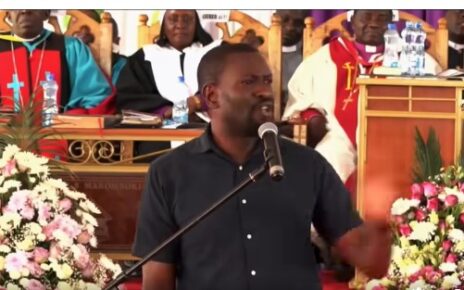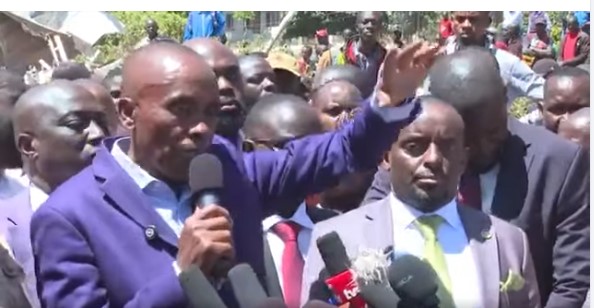
Kiambu Governor Kimani Wamatangi has sparked widespread public debate after issuing a dramatic declaration following the demolition of properties linked to him near Nairobi’s Nyayo Stadium. The governor, visibly angered by the government-led exercise, claimed the demolitions were politically motivated and aimed at intimidating him.
Speaking to supporters shortly after the incident, Governor Wamatangi vowed to stage a 40-day fast at the site, stating in Kiswahili, “Nitakaa hapa 40 days fasting bila hata kunywa maji,” a statement that immediately went viral across social media platforms. His remarks have drawn mixed reactions, with some Kenyans expressing sympathy while others questioned the symbolism and practicality of the protest.
The demolitions are part of an ongoing government operation targeting structures said to have been built on public land or within restricted zones. Authorities have maintained that the exercise is lawful and affects multiple properties regardless of ownership or political status. However, Wamatangi insists that due process was not followed and that he was unfairly targeted.
Political analysts argue that the incident highlights the growing tension between national and county governments, especially as leaders position themselves ahead of future political contests. Supporters of the governor view the demolition as an abuse of state power, while critics argue that leaders should also be subject to the law like ordinary citizens.
As the controversy continues to unfold, the incident has reignited national conversations around land ownership, selective enforcement of the law, and the use of public demonstrations as political tools. Whether Governor Wamatangi’s bold declaration will translate into sustained action or political capital remains to be seen.