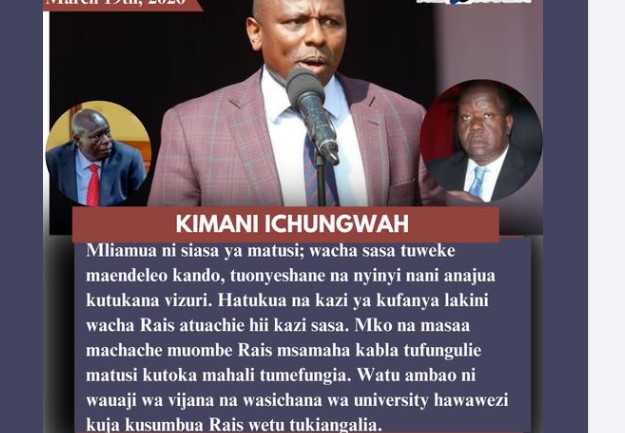
National Assembly Majority Leader Kimani Ichung’wah has ignited fresh political debate after issuing a strongly worded statement in response to what he described as continued attacks against President William Ruto.
In his remarks, Ichung’wah accused opposition figures of engaging in what he termed as “politics of insults,” warning that leaders allied to the government could abandon their development agenda and respond in equal measure. His statement suggested that if the current tone of political discourse persists, the focus could shift from national development to verbal confrontations.
He further issued an ultimatum, urging those he accused to apologize to the President within a short period, failing which government allies would respond forcefully. The comments also included serious allegations against unnamed individuals, linking them to past incidents involving violence, which has further fueled controversy around his remarks.
The statement has drawn mixed reactions across the political divide. Critics have expressed concern over the escalation of rhetoric, arguing that such language from senior leaders risks deepening political divisions and distracting from pressing national issues. Supporters, on the other hand, view his remarks as a firm defense of the President and a response to sustained criticism from the opposition.
Observers note that the exchange reflects a broader trend of rising political temperatures in the country, especially as early positioning and alignments begin to emerge ahead of future elections. There are increasing calls from civil society and political analysts for leaders to tone down their language and prioritize issue-based politics over personal attacks.
As the debate continues, Ichung’wah’s statement highlights the delicate balance between political competition and responsible leadership, with many Kenyans urging a return to respectful dialogue and a renewed focus on development and governance.

