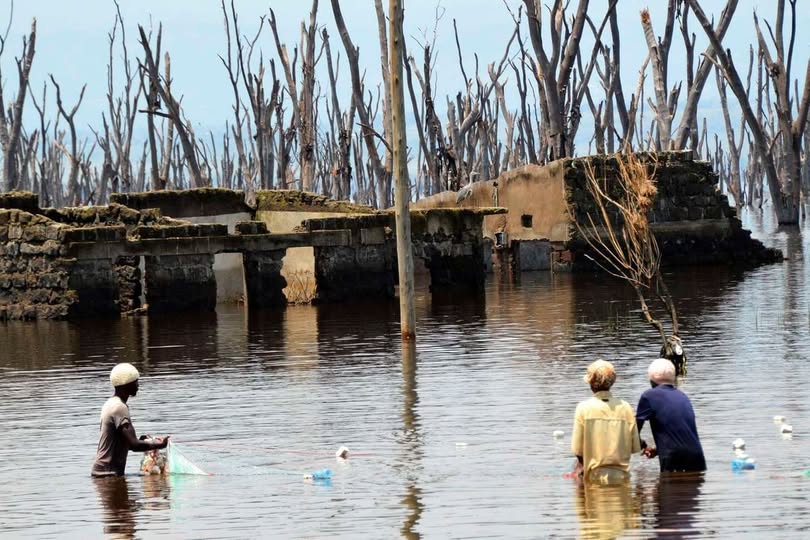
In Nakuru County, residents living around Lake Nakuru are locked in a desperate struggle for survival, openly defying a government ban on fishing despite the looming dangers posed by contaminated waters. Their message is blunt but powerful: “Hunger will finish us, not fish.”
For many families, the lake has long been a lifeline, providing both food and income. However, government authorities imposed a fishing ban after concerns that the waters had become toxic and unsafe, with fears that consuming fish from the lake could expose communities to life-threatening health risks. Officials have also argued that uncontrolled fishing is damaging the delicate ecosystem of the lake, which is a Ramsar site recognized internationally for its ecological importance and biodiversity.
Yet, for the locals, the calculus of survival is stark. Food insecurity in the region has grown so severe that many argue they would rather risk eating potentially unsafe fish than go to bed hungry. Parents say they have no alternative sources of livelihood, and children depend on the daily catch to have at least one meal. “We know it is dangerous,” one fisherman said, “but hunger is more dangerous than fish from this lake.”
The situation reflects a larger humanitarian crisis—one where poverty, unemployment, and the rising cost of living have forced residents into choices that pit their health against their hunger. Environmental authorities may see the ban as necessary to protect public safety and preserve the lake’s ecosystem, but locals see it as a direct assault on their only means of survival.
Lake Nakuru, famous worldwide for its flamingos and wildlife, is not just a tourist attraction but also a vital source of life for surrounding communities. With limited farming opportunities and little government support, fishing has remained the main fallback for thousands of families. The continued defiance of the ban underscores a fundamental tension: how to balance environmental conservation and public health with the pressing reality of poverty and hunger.
Human rights advocates argue that while conservation efforts are critical, they cannot succeed without offering residents viable alternatives. Calls have been made for the government to introduce social protection programs, expand food distribution, and create alternative income-generating activities for the people living around Lake Nakuru. Without such measures, the ban is likely to remain ineffective, as hunger continues to drive families to the water’s edge in search of fish.
The standoff around Lake Nakuru tells a deeper story of survival and desperation. It is not merely about a ban—it is about a community crying out for attention, for food security, and for a livelihood that does not force them to choose between hunger and health. Unless urgent interventions are made, the grim choice facing the residents—to eat and risk illness, or to starve and risk death—will remain their daily reality.