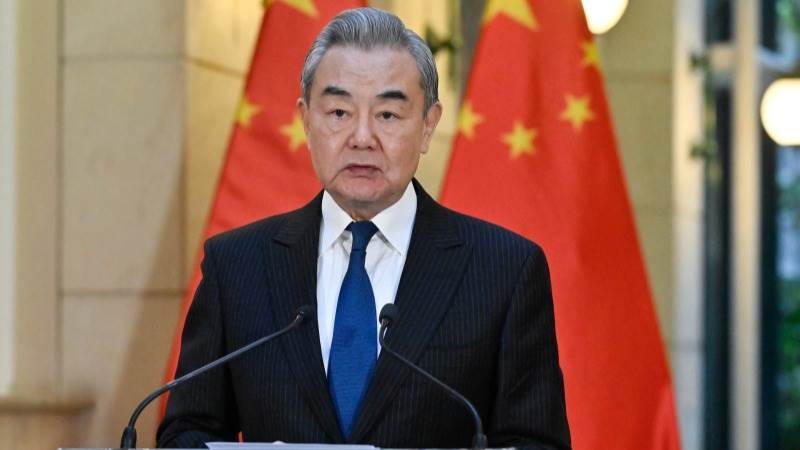
Chinese Foreign Minister Wang Yi held discussions with his counterparts from France and Germany on the sidelines of the Munich Security Conference, emphasizing the need to strengthen bilateral cooperation and coordinate on global issues. In talks with French Foreign Minister Jean-Noel Barrot, Wang highlighted the importance of both countries being “independent and responsible major countries” and called for deeper collaboration across political, economic, and strategic areas. The conversation underscored China’s intent to solidify ties with key European powers as part of its broader diplomatic strategy.
In a separate meeting with Germany’s Johann Wadephul, Wang urged Germany to join China in opposing global unilateralism. This appeal reflects Beijing’s push for a multipolar international order, where nations coordinate rather than act unilaterally, particularly in matters of global governance, trade, and security. Wang’s statements signal China’s interest in positioning itself as a partner to European nations that share, or at least are open to, such principles.
The meetings highlight China’s continued engagement with Europe amid increasing geopolitical tensions. By seeking stronger relations with France and Germany, China appears to be pursuing both economic and strategic objectives, aiming to secure allies in Europe while promoting a vision of international cooperation aligned with its interests. Strengthening these ties could facilitate trade, investment, and political dialogue, while providing China with partners willing to support its stance on global governance and multilateralism.
The interactions at the Munich Security Conference also illustrate the nuanced diplomacy that characterizes China’s engagement with Europe. By framing the discussions around independence, responsibility, and opposition to unilateralism, China reinforces its image as a constructive global actor while subtly advocating for European alignment with its geopolitical approach. For both France and Germany, these engagements present opportunities to balance their relations with China against broader European and transatlantic commitments.


