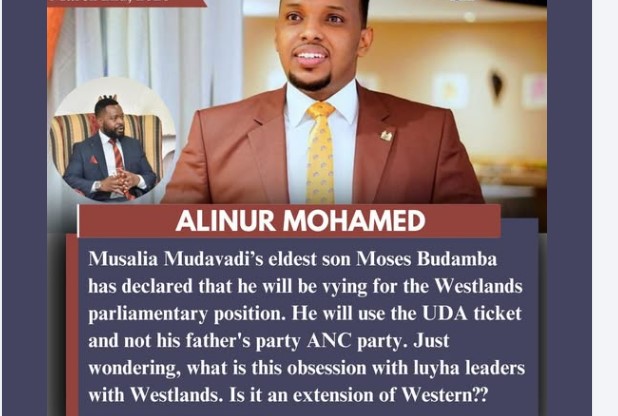
Alinur Mohamed recently commented on the political ambitions of Moses Budamba, who has declared his intention to run for the Westlands parliamentary seat. According to reports, Budamba will contest using the United Democratic Alliance (UDA) ticket rather than his father Musalia Mudavadi’s party, the Amani National Congress (ANC).
Alinur Mohamed framed the move with a mix of curiosity and critique, questioning why Luhya leaders, such as Budamba, seem drawn to political positions in Westlands—a constituency outside their home region. The comment reflects wider debates in Kenyan politics about ethnic affiliations, regional representation, and political strategy, particularly when leaders seek elective seats outside their traditional support bases.
The situation highlights a trend where political figures increasingly prioritize party platforms, urban constituencies, and strategic opportunities over regional loyalties. While critics may see this as opportunism, supporters argue that capable leaders can represent any constituency effectively, regardless of their ethnic or regional background. The controversy underscores the enduring tension between identity politics and merit-based representation in Kenya’s evolving political landscape.