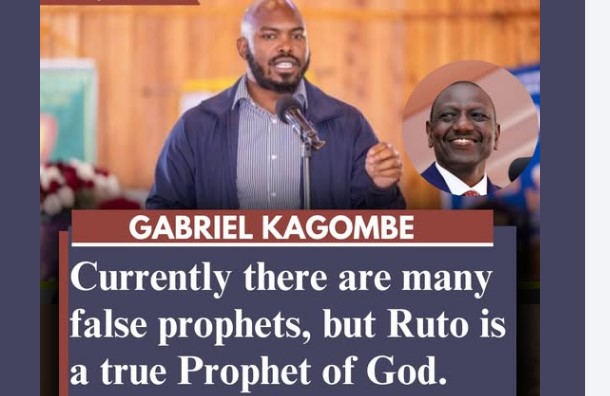
In recent public statements, political commentator GG Kagombe has described President William Ruto as a “true Prophet of God,” claiming that his leadership will transform Kenya. Kagombe contrasted Ruto with other figures he called “false prophets,” asserting that the President’s vision, guidance, and policies are divinely inspired and capable of bringing meaningful change to the country.
Kagombe’s remarks reflect a growing trend in Kenya where political leadership and religious rhetoric often intersect. By framing Ruto as a prophetic figure, the commentator positions the President not only as a political leader but also as someone with a moral and spiritual mandate to guide the nation. Such statements are likely to resonate with voters who value faith-based leadership or view political figures through a lens of moral authority.
Supporters of Ruto may interpret Kagombe’s endorsement as a validation of the President’s initiatives and reform agenda, which include economic empowerment programs, infrastructural development, and efforts to modernize governance. By invoking divine authority, Kagombe reinforces the narrative that Ruto’s leadership transcends ordinary politics and carries a mission to effect transformational change for all Kenyans.
However, these assertions also raise questions about the relationship between faith and politics. Critics argue that blending religious language with political endorsements can blur the line between governance and spiritual authority. They caution that while inspirational rhetoric can inspire citizens, it is essential that policy decisions remain grounded in law, institutional frameworks, and inclusive governance rather than solely on personal or perceived divine mandates.
Kagombe’s statement contributes to ongoing debates about leadership legitimacy in Kenya. The use of prophetic language in political discourse underscores the emotional and symbolic weight that public figures carry in influencing public opinion. Whether interpreted as a metaphorical expression of confidence or a literal endorsement of spiritual authority, such statements illustrate the powerful role of narrative and perception in shaping political allegiances.
Ultimately, GG Kagombe’s declaration that “Ruto is a true Prophet of God” reflects both admiration for the President and the hopes of citizens seeking transformation. It also highlights the enduring interplay between religion and politics in Kenya, where leaders are often judged not only on policy outcomes but also on the moral and ethical narratives constructed around their public personas.