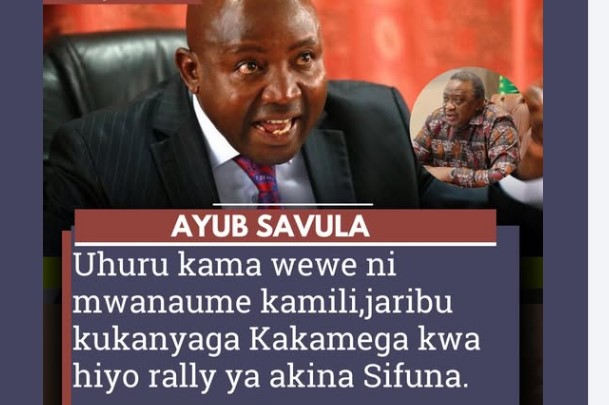
Political temperatures continue to rise after Ayub Savula publicly challenged former President Uhuru Kenyatta over reports of a planned political rally associated with allies of ODM Secretary General Edwin Sifuna.
In his remarks, Savula dared Uhuru to step foot in Kakamega during the anticipated gathering, using strong language that has since sparked debate across the political divide. Supporters of Savula argue that he was defending regional political interests, while critics view the challenge as unnecessary provocation that could heighten tensions.
Kakamega County has recently become a focal point of shifting political alliances, with leaders positioning themselves ahead of future electoral contests. Public rallies have increasingly served as platforms not only for policy discussion but also for symbolic shows of strength and territorial influence.
Uhuru Kenyatta, though retired from active office, remains a significant figure in Kenya’s political landscape. His appearances or perceived alignments often trigger sharp reactions from leaders across the spectrum. Savula’s challenge reflects the ongoing rivalry between factions aligned to different power centers within the country.
Political observers note that such confrontational rhetoric can energize supporters but may also deepen divisions. In a democratic society, freedom of movement and political expression are constitutional rights. However, leaders are also expected to promote calm and constructive engagement rather than escalate tensions.
As the situation unfolds, attention will likely focus on whether the planned rally proceeds peacefully and how key political actors choose to frame their messages moving forward.