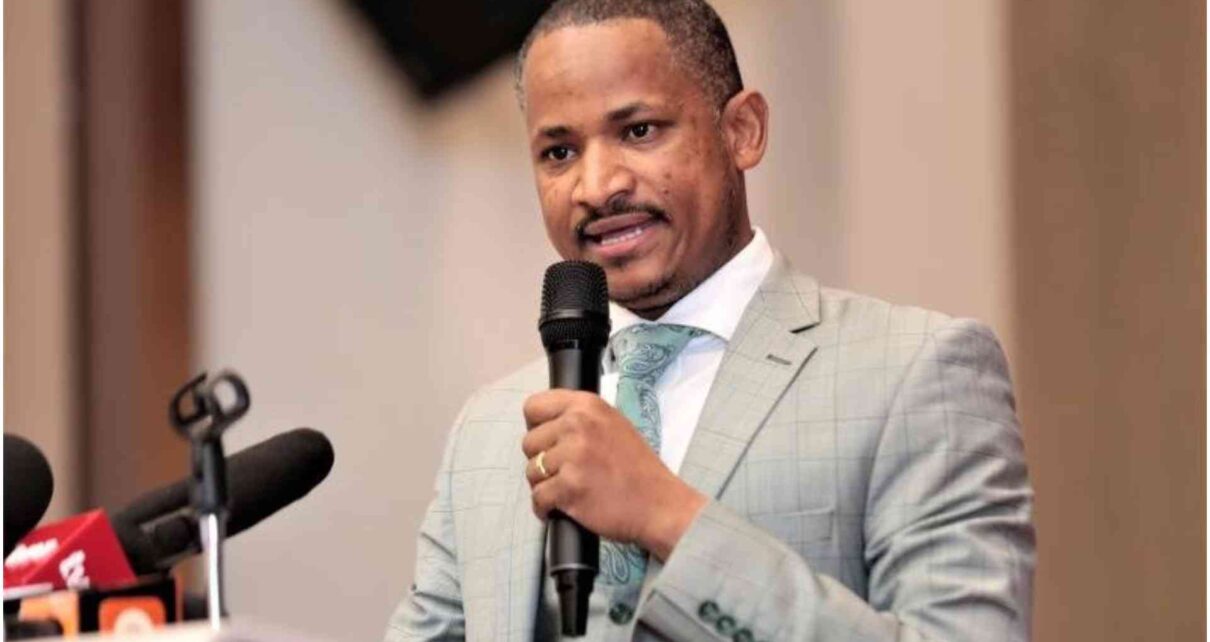
Kenya’s political scene has witnessed a fresh wave of controversy after Babu Owino, the outspoken MP for Embakasi East, publicly called for the resignation of Nairobi Governor Johnson Sakaja following the signing of a deal with President William Ruto. Owino argued that Sakaja’s agreement undermines public trust and questions his qualifications to continue serving as governor, sparking a heated debate among political observers and Nairobi residents.
Owino’s criticism is grounded in the belief that Sakaja, by collaborating with Ruto, has aligned himself with political interests that may not reflect the will of Nairobi residents. According to Owino, such decisions demonstrate a lack of independence and accountability, which are essential qualities for leadership in Kenya’s capital city. He emphasized that Nairobians deserve leaders who act in the city’s best interest rather than for personal or national political gains.
The controversy comes amid a broader context of shifting alliances in Kenyan politics, where local and national leaders are increasingly entering strategic partnerships ahead of upcoming elections. Sakaja’s deal with Ruto is seen by some analysts as a pragmatic move to strengthen his political influence, while critics like Owino argue that it compromises his integrity and autonomy.
Reactions among Nairobi residents have been mixed. Some support Owino’s call, citing the need for leaders who are transparent and responsive to their constituents. Others argue that political collaboration is an unavoidable part of governance and that Sakaja’s decision could bring resources and benefits to Nairobi.
This development underscores the high-stakes nature of Kenyan politics, where alliances and deals often provoke intense public scrutiny. As the debate over Sakaja’s resignation unfolds, it highlights ongoing tensions between political pragmatism and perceived accountability, raising important questions about leadership, representation, and governance in Kenya’s capital.