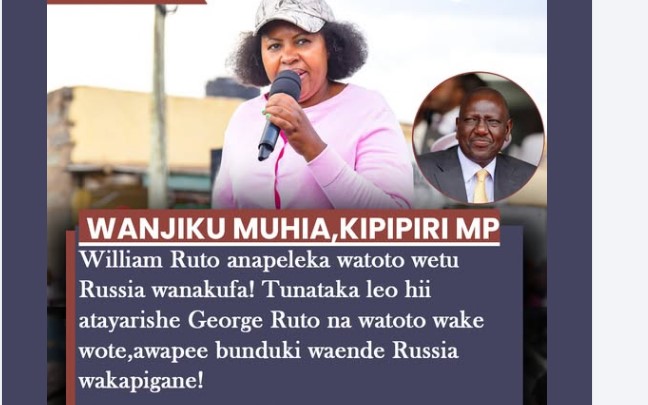
Political debate in Kenya has intensified following strong remarks attributed to Nyandarua Woman Representative Wanjiku Muhia, who criticized President William Ruto over reports of Kenyan youths being recruited to work or serve in Russia. In a fiery statement, Muhia questioned why ordinary citizens’ children are allegedly being sent abroad into dangerous situations while leaders’ own children remain at home.
Her remarks reflect growing concern among sections of the public about the safety and welfare of Kenyan youth seeking opportunities overseas. In recent years, many young Kenyans have pursued jobs abroad due to unemployment and economic hardships at home. While the government has promoted foreign labor agreements as a way to create opportunities, critics argue that some of these arrangements may expose citizens to unsafe conditions, particularly in regions experiencing conflict.
Muhia’s comments appear to stem from frustration over perceived inequality in leadership. By suggesting that leaders should also send their own children if they believe such opportunities are safe, she was underscoring a broader political message about fairness, accountability, and shared responsibility. The statement resonates emotionally with many Kenyans who feel that economic struggles disproportionately affect ordinary families.
The issue also raises important questions about transparency in foreign labor agreements and the protection of Kenyan citizens abroad. When young people leave the country for work, especially in regions with security concerns, there is an expectation that the government will ensure their safety through proper vetting, contracts, and diplomatic support.
As political temperatures rise ahead of future elections, statements like Muhia’s highlight the sensitivity surrounding youth employment, migration, and national leadership. The debate is likely to continue as citizens demand clarity about foreign job programs and equal standards of responsibility for all leaders.