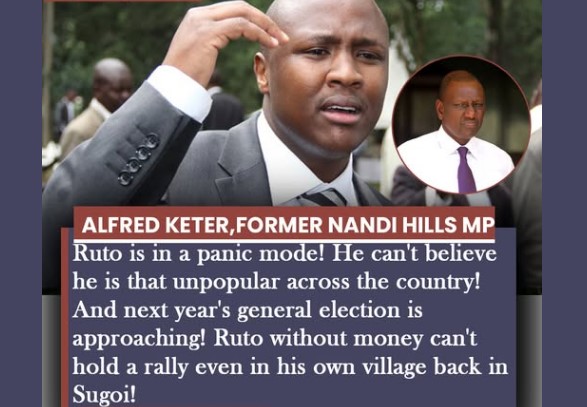
Alfred Keter’s remarks about President William Ruto paint a picture of a leader under growing political pressure as the next general election draws closer. By describing the president as being in “panic mode,” Keter taps into a wider public conversation about popularity, political momentum, and the cost of sustaining grassroots support in Kenya’s increasingly competitive political landscape.
At the heart of Keter’s argument is the claim that President Ruto is struggling to come to terms with declining public approval across the country. In Kenyan politics, popularity is not just measured by opinion polls but by the ability to mobilize crowds, inspire loyalty, and maintain a strong presence at the grassroots level. Rallies have traditionally been a key symbol of political strength, and the suggestion that the president cannot command such gatherings without heavy financial backing strikes at the core of his political image.
Keter’s reference to Sugoi, the president’s home village, carries symbolic weight. A leader’s backyard is often viewed as their strongest base of support, a place where loyalty is assumed rather than negotiated. By alleging that even this support is no longer guaranteed, Keter implies that dissatisfaction with the current administration may be deeper and more widespread than official narratives suggest. Whether literal or rhetorical, the statement is designed to provoke debate and question the president’s connection with ordinary citizens.
The issue of money in politics also emerges strongly from Keter’s critique. Campaign financing has long played a decisive role in Kenyan elections, influencing turnout, visibility, and organization. By arguing that Ruto “without money” cannot hold a rally, Keter highlights concerns about transactional politics and raises questions about whether genuine public support is being replaced by financial inducements. This framing resonates with voters who are increasingly sensitive to economic hardship and skeptical of leaders perceived to rely on wealth rather than ideas.
As the country moves closer to the next general election, such statements are likely to intensify political discourse and sharpen divisions. Keter’s comments reflect not just personal opposition to the president but a broader struggle over narrative, legitimacy, and public trust. Whether these claims translate into electoral consequences will depend on how the government responds to public concerns and how convincingly it reconnects with the electorate beyond rallies and political theatrics.