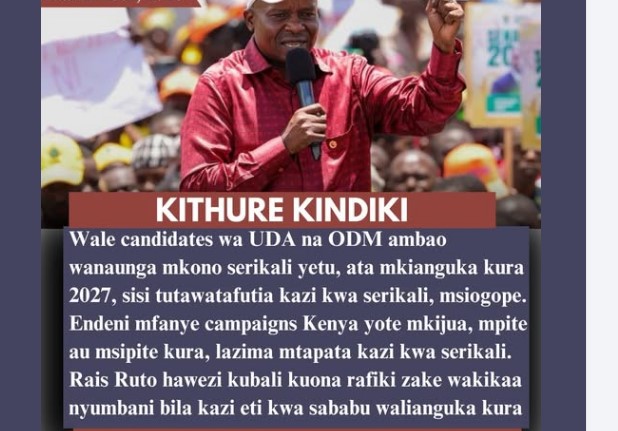
The political climate in Kenya is gradually intensifying as leaders begin to position themselves and their allies ahead of the 2027 general elections. A recent statement attributed to Deputy President Kithure Kindiki has sparked widespread debate, particularly regarding the relationship between political loyalty, governance, and public service. His remarks suggested that candidates allied to the government—whether from UDA or ODM—should not fear electoral defeat, as they would still be considered for government positions.
At the heart of this statement lies a controversial but familiar theme in Kenyan politics: the intersection of political allegiance and access to state opportunities. By assuring candidates of jobs regardless of electoral outcomes, the message appears to encourage loyalty to the ruling administration. This could be interpreted as a strategy to strengthen political alliances and maintain a broad base of support across party lines, especially in a political environment where coalitions and shifting loyalties are common.
However, such sentiments raise important questions about meritocracy and the principles of democratic competition. Elections are designed to allow citizens to choose their leaders based on performance, policies, and trust. When leaders suggest that losing candidates may still secure government roles, critics may argue that it undermines the spirit of electoral accountability. It creates a perception that political connections, rather than competence or public approval, may determine access to positions of influence.
Supporters of the government, on the other hand, may view this approach as a practical way to retain experienced leaders within the system. Politics often produces individuals with significant expertise and influence, and losing an election does not necessarily mean one lacks the ability to contribute to national development. From this perspective, integrating such individuals into government roles could be seen as maximizing available talent for the country’s benefit.
The mention of President William Ruto in the statement further reinforces the idea of a leadership style that values loyalty and cohesion among allies. It portrays a political culture where relationships and support networks are central to governance. While this may strengthen internal unity, it also invites scrutiny from the public, especially regarding fairness, transparency, and equal opportunity.
As Kenya moves closer to the next election cycle, statements like these are likely to shape public discourse and influence voter perceptions. Citizens are increasingly attentive to issues of governance, accountability, and inclusivity. The challenge for political leaders will be to balance the need for strong alliances with the expectations of a democratic system that prioritizes fairness and the will of the people.
Ultimately, the debate sparked by Kindiki’s remarks highlights a broader conversation about the future of Kenyan politics. It raises critical questions about how leaders are rewarded, how public roles are allocated, and what voters can expect from those in power. As the political landscape continues to evolve, such discussions will remain central to defining the country’s democratic trajectory.