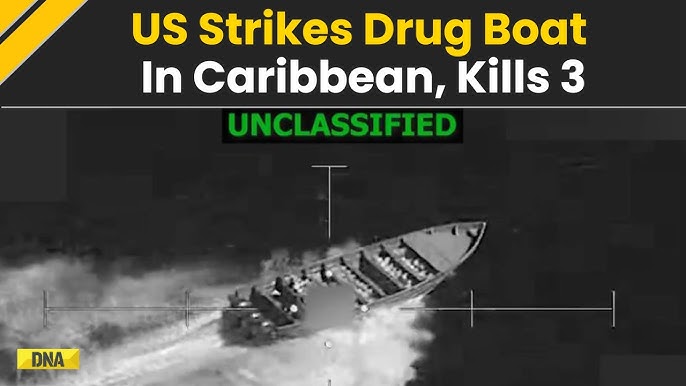
A recent report by Deutsche Welle highlights growing controversy after a United States military strike on an alleged drug-trafficking boat in the Caribbean Sea left three people dead. The incident is part of a broader counter-narcotics campaign that has drawn both support and criticism, raising serious legal and humanitarian questions.
According to the U.S. military, the vessel was operating along known drug-smuggling routes when it was targeted. United States Southern Command (SOUTHCOM), which oversees U.S. military operations in Central and South America as well as the Caribbean, described the operation as part of efforts to disrupt transnational criminal networks. Officials argue that such actions are necessary to combat the flow of illegal narcotics, which they say fuels violence, organized crime, and instability across the region.
Reports indicate that this strike is not an isolated event. Since late 2025, dozens of similar operations have reportedly been carried out in the Caribbean and eastern Pacific waters. U.S. authorities maintain that these missions are carefully planned and based on intelligence assessments. However, critics point out that independent verification of the claims has been limited. Questions have emerged regarding how targets are identified, what level of evidence is required before a strike is authorized, and whether alternative methods—such as interception and arrest—are considered.
The broader debate centers on the legal framework governing such actions. International maritime law traditionally emphasizes law enforcement cooperation and judicial processes when dealing with suspected criminal activity at sea. The use of military force, especially lethal force, in counter-drug operations raises concerns about proportionality and due process. Human rights advocates argue that suspects should be detained and prosecuted whenever possible rather than targeted in lethal operations.
Supporters of the strikes argue that drug trafficking networks are heavily armed and highly organized, sometimes operating in ways that blur the line between criminal enterprise and armed groups. They contend that traditional law enforcement methods may not always be sufficient in international waters, particularly when vessels attempt to evade capture or pose a threat. From this perspective, the operations are framed as part of a broader security strategy aimed at disrupting dangerous networks before drugs reach major markets.
The incident underscores the evolving nature of counter-narcotics efforts and the challenges governments face in balancing security concerns with international legal standards. As more information becomes available, the strike is likely to remain a focal point in discussions about the role of military power in law enforcement operations at sea and the accountability mechanisms that should accompany such actions.