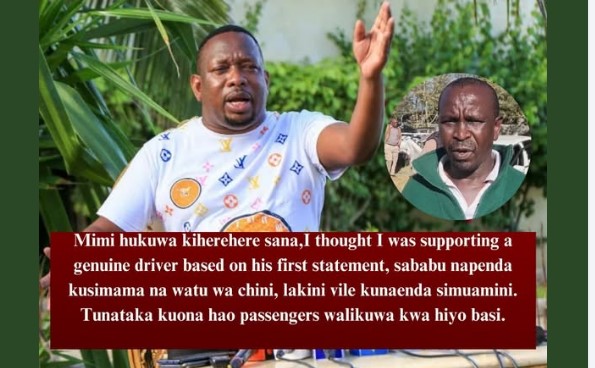
Former Nairobi Governor Mike Sonko has made a surprising reversal regarding his earlier pledge to support a bus driver implicated in the death of veteran politician Cyrus Jirongo. Initially, Sonko had expressed readiness to assist the driver, citing his commitment to standing with ordinary Kenyans. However, he later clarified that his support was based on preliminary information that has since raised doubts.
In a statement, Sonko admitted, “I was not fully informed; I thought I was supporting a genuine driver based on his first statement because I like standing with people from the grassroots. But as things have unfolded, I now have doubts. We need to see who the passengers were on that bus.” His remarks suggest that ongoing developments, including witness accounts or emerging evidence, prompted a reassessment of his initial position.
The U-turn has reignited debate about public figures intervening in high-profile cases, especially those involving criminal investigations. Supporters of Sonko argue that his initial stance reflected a desire to defend ordinary citizens, while critics say it demonstrates the risks of taking sides prematurely without full information.
By calling for a closer examination of the passengers involved, Sonko appears to be advocating for transparency and accountability, signaling that he wants the investigation to proceed on facts rather than speculation. His reversal highlights the delicate balance leaders must maintain between public advocacy and ensuring that justice is allowed to take its course without interference.
The incident underscores broader concerns in Kenya about how public opinion, media coverage, and political figures can influence criminal cases, sometimes complicating the pursuit of justice. It also serves as a cautionary tale about the importance of thorough investigation before offering support in sensitive matters.