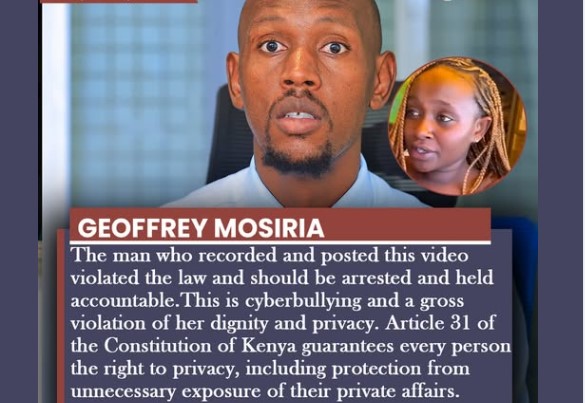
Controversy surrounding James Opande has deepened after Geoffrey Mosiria publicly called for his arrest, accusing him of sharing an explicit video of Mosiria’s alleged extramarital affair. Mosiria claims the video, which circulated widely online, depicts his “drunk Mpango wa kando” and has caused him public humiliation.
In strong statements, Mosiria demanded legal action, insisting that Opande violated both privacy and moral standards by distributing the content. The incident has sparked heated debates online about accountability, digital ethics, and the legal consequences of sharing intimate material without consent.
While Opande maintains that the video was private and that his phone was hacked, Mosiria’s call for law enforcement intervention highlights the seriousness of the case. Observers note that Kenya’s laws on cyber harassment, revenge porn, and privacy could play a central role if authorities choose to investigate.
The controversy has reignited discussions on the dangers of online content going viral, the responsibility of individuals to protect others’ privacy, and the broader societal impact of exposing personal matters in the digital age. As tensions rise, many are watching closely to see whether the legal system will intervene or if the matter will remain a public spectacle.


