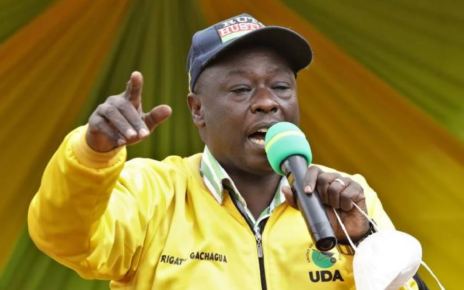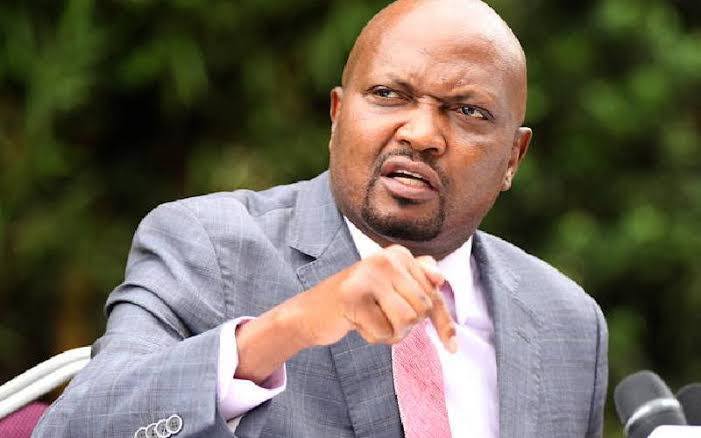
Former senior economic advisor to President William Ruto and Chama Cha Kazi (CCK) party leader, Moses Kuria, has stirred fresh political controversy after claiming that the recent State House meeting was dominated by Deputy President Rigathi Gachagua’s allies.
In a fiery late-night social media post, Kuria alleged that nearly 70 percent of those who attended the September 12 gathering at State House Nairobi were members of the Democracy for the Citizens Party (DCP), a political outfit associated with Gachagua.
According to Kuria, the party not only mobilized its members for the event but also allegedly reached out to Murang’a delegations heading to the meeting, urging them to include DCP loyalists in their lists so they could benefit from the KSh 10,000 allowances given to participants. He condemned the move, describing it as immoral and a betrayal of political principles.
“I understand State House was 70% DCP members. I think this is immoral. DCP, keep your members out of State House. Be principled,” Kuria wrote.
The meeting, which was convened by President Ruto, brought together grassroots leaders and a section of elected officials from Murang’a County. Among those present were Maragua MP Mary Wamau, Murang’a Woman Representative Betty Maina, nominated senator Veronica Maina, nominated MP Sabina Chege, several MCAs, and Cabinet Secretary for Interior Kithure Kindiki.
During the meeting, the President assured the Murang’a leaders of various development projects, including the construction of two modern stadiums to promote sports and youth empowerment in the county.
However, even as State House projected unity, political divisions were evident. Deputy President Rigathi Gachagua met separately with a section of Murang’a MCAs who boycotted the event. These leaders accused President Ruto of attempting to buy loyalty by offering each MCA KSh 300,000.
Kuria’s claims highlight the growing political rift within the Kenya Kwanza coalition, with rival camps now openly accusing each other of betrayal, opportunism, and double standards. As the 2027 elections inch closer, the contest between President Ruto’s allies and those loyal to his deputy appears to be intensifying.