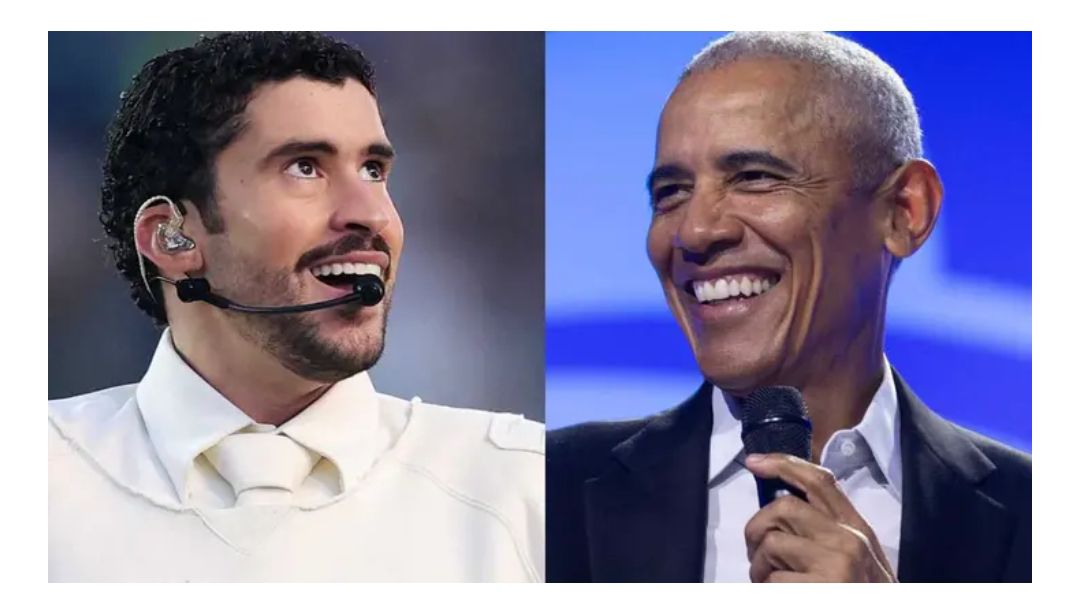
The 2026 Super Bowl halftime show, headlined by international music star Bad Bunny, became one of the most talked-about cultural moments of the year — but not simply because of its music and performance. What began as a celebration of Latin culture quickly spiraled into a political debate, as a group of Republican lawmakers publicly called for an investigation into the show, accusing it of crossing lines of decency. In response, former President Barack Obama offered what many have described as a “perfect take” — one that emphasizes unity and perspective over division.
At the heart of the controversy were objections from certain Republican members of Congress, who argued that elements of Bad Bunny’s performance — including his dance moves and some of the lyrical content — were “inappropriate” for national television. These lawmakers suggested that the Federal Communications Commission (FCC) or other authorities should investigate whether the broadcast violated decency standards. Their calls quickly spread through conservative media, turning a halftime performance into a flashpoint in a broader culture-war conversation.
Obama’s response, shared in an interview following the event, was notably measured and unifying. Rather than attacking critics or dismissing the cultural disagreements behind the debate, he approached the situation with emphasis on shared experiences. Obama highlighted that millions of Americans, representing a wide range of ages and backgrounds, enjoyed the show together — children danced in living rooms while elders watched, creating scenes of communal celebration rather than conflict. For him, this moment captured something deeper than a superficial quarrel: it reflected the diversity of American culture and the ability of art to bring people together.
What made Obama’s remarks resonate with many observers was his refusal to reduce the controversy to simple partisanship. He acknowledged that not every artistic choice would appeal to every viewer and that pop culture can be messy and imperfect. But he also pointed out that disagreements about entertainment — even when amplified by political rhetoric — do not have to fragment society. In doing so, Obama shifted the conversation away from punitive investigations and toward a broader recognition of cultural expression and inclusion.
The backlash from Republicans, meanwhile, calls attention to an ongoing tension in American politics: the struggle to define what is considered “acceptable” in national media and who gets to make that call. Critics of the investigation urge point out that the Super Bowl, as one of the most-watched television events in the United States, has long featured performances that push artistic boundaries. They argue that singling out Bad Bunny — a Latino artist performing largely in Spanish — reflects deeper anxieties about cultural shifts rather than objective standards of decency.
Obama’s perspective, therefore, stands in contrast to these calls for investigation. Instead of sanctioning the performance or endorsing censorship, he chose to highlight the positive moments the event created. His comments served not just as commentary on one performance, but as a broader reminder about the value of cultural exchange and the importance of viewing disagreements through a lens of empathy rather than outrage.
In the end, the clash over the Super Bowl halftime show illuminates larger debates happening in the United States — debates about representation, artistic freedom, and the role of politics in interpreting culture. Obama’s reaction did not dismiss criticism outright, but he reframed it in a way that encouraged Americans to find common ground. Whether or not people agree with Bad Bunny’s music or style, his halftime performance became a symbol of cultural diversity — and Obama’s response encouraged viewers to see that diversity as strength rather than a threat.