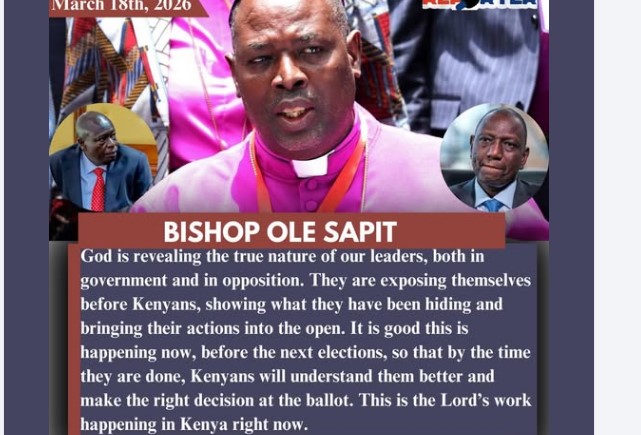
The statement by Jackson Ole Sapit reflects a deeply spiritual interpretation of the current political climate in Kenya. By framing unfolding political events as “the Lord’s work,” the Archbishop introduces a moral and faith-based lens through which citizens can evaluate their leaders.
At its core, the message suggests that recent actions and controversies involving both government and opposition figures are not случайные, but rather a form of exposure—where hidden traits, intentions, and behaviors are being brought into the public eye. In this view, what Kenyans are witnessing is a period of revelation, where truth is gradually becoming visible.
Such a perspective resonates strongly in a country where religion plays a significant role in public life. Many citizens look to spiritual leaders not just for guidance in faith, but also for moral clarity in times of political uncertainty. By presenting the situation as divinely orchestrated, the statement encourages people to pay closer attention, reflect more deeply, and avoid making rushed political judgments.
It also places responsibility on voters. If indeed leaders are “revealing themselves,” then citizens are being given an opportunity to observe carefully and make informed decisions during elections. This shifts the focus from blind loyalty or ethnic alignment to a more conscious evaluation of character, integrity, and leadership style.
However, this kind of message can be interpreted in different ways. Supporters may see it as a call for moral awakening, while critics might argue that mixing religion and politics can complicate public discourse. Even so, it underscores an important reality—leadership is not only about policies and promises, but also about character and accountability.
Ultimately, the statement serves as a reminder that moments of political tension can also be moments of clarity. For many Kenyans, it may be a time to observe, question, and reflect carefully before making decisions that will shape the country’s future.