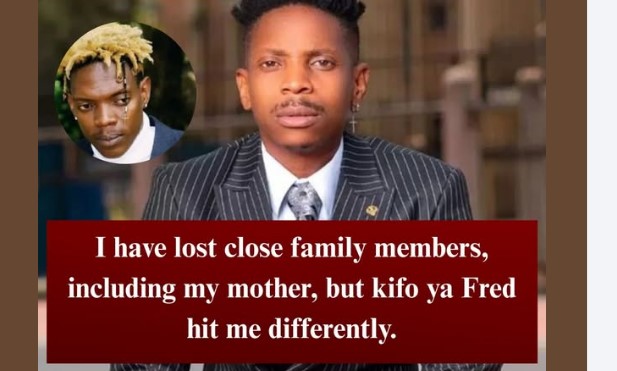
Comedian and activist Eric Omondi has spoken emotionally about the death of Fred, admitting that the loss affected him in a way he did not expect, despite having previously endured the pain of losing close family members, including his mother. His remarks have resonated with many Kenyans who understand that grief does not follow a fixed pattern and that some losses cut deeper than others, regardless of one’s past experiences.
According to Eric, losing his mother was one of the most painful moments of his life, yet the death of Fred struck him differently. He explained that the bond he shared with Fred went beyond ordinary friendship, describing it as a connection built on shared struggles, loyalty, and genuine brotherhood. Such relationships, especially those forged through hardship, often leave a lasting emotional imprint, making the loss feel unusually heavy.
Eric’s statement highlights an important truth about grief: it is not a competition, nor is it predictable. The pain of losing someone is shaped by emotional closeness, shared memories, and unresolved dreams rather than blood relations alone. In Fred’s case, Eric suggests that their shared journey and mutual support made the loss deeply personal, reopening emotional wounds he thought he had learned to manage.
The comedian’s openness has sparked conversations around mental and emotional health, particularly among public figures who are often expected to appear strong at all times. By admitting vulnerability, Eric challenges the cultural expectation that men, especially celebrities, must suppress grief and move on quickly. His words reflect the silent struggles many people face when mourning, even years after previous losses.
Ultimately, Eric Omondi’s reflection is a reminder that grief evolves and that every loss carries its own weight. While time may teach resilience, it does not erase pain. Some deaths arrive unexpectedly and shake the very foundation of one’s emotional strength, leaving scars that words can barely explain.