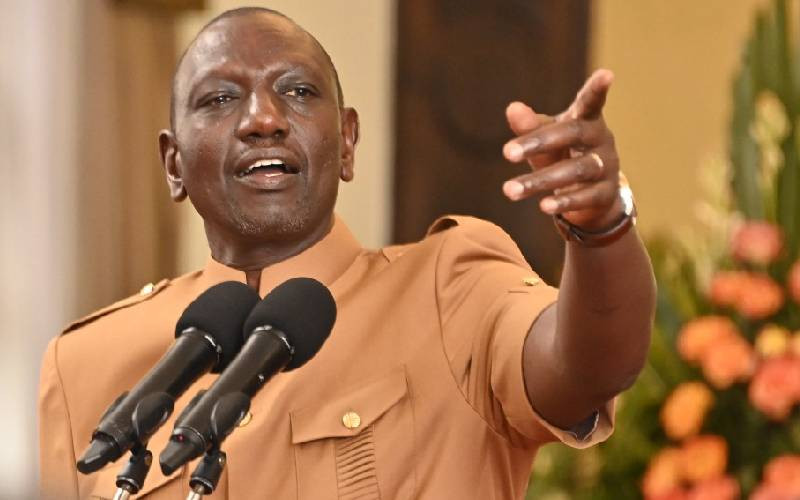
President William Ruto’s reported outburst toward his deputy, Rigathi Gachagua, over remarks on the NYOTA Funds has sparked intense public debate, exposing growing tensions within the top leadership and raising serious questions about governance, accountability, and communication in government.
The NYOTA Funds were introduced as a flagship initiative meant to empower the youth and small-scale entrepreneurs by providing affordable financing and opportunities for economic growth. As such, any public disagreement or conflicting statements from senior leaders about the program risks undermining public confidence. When Deputy President Gachagua made remarks that appeared to contradict or question the handling of the funds, it touched a sensitive nerve within the administration.
President Ruto’s strong response, reportedly telling Gachagua off in unusually blunt language, signals how seriously the government views discipline and unity on policy matters. For Ruto, maintaining a single, consistent message is not just about image—it is about protecting the credibility of government programs that affect millions of Kenyans. Mixed signals from senior officials can easily be interpreted as incompetence, internal sabotage, or even corruption, whether or not that is the case.
However, the incident also raises concerns about leadership style and internal democracy. Critics argue that harsh public reprimands may discourage open discussion and honest feedback within government. Healthy debate, they say, is essential for refining policy and preventing mistakes, especially in large financial programs like NYOTA Funds that involve public money.
Supporters of the president, on the other hand, view his reaction as decisive leadership. They argue that senior leaders must exercise restraint and responsibility, especially when speaking on national programs. From this perspective, Gachagua’s remarks were ill-timed and risked politicizing an initiative meant to uplift ordinary citizens.
Ultimately, the episode underscores a broader challenge facing the Kenya Kwanza administration: balancing unity with transparency. As Kenyans continue to struggle with high living costs and unemployment, they expect leaders to focus less on internal disputes and more on delivering results. Whether this confrontation leads to better coordination or deeper divisions will depend on how the leadership handles disagreements going forward.
What remains clear is that the NYOTA Funds, and other similar initiatives, will be judged not by political rhetoric but by their real impact on the lives of Kenyans.