Tanzanian President Samia Suluhu Hassan has raised concerns over the recent youth-led demonstrations in the country, suggesting that many participants may have been paid to take part. Her remarks, which have drawn attention both locally and across the region, reflect growing scrutiny over the motivations behind public protests and the role of political actors.
Speaking publicly, President Samia stated:
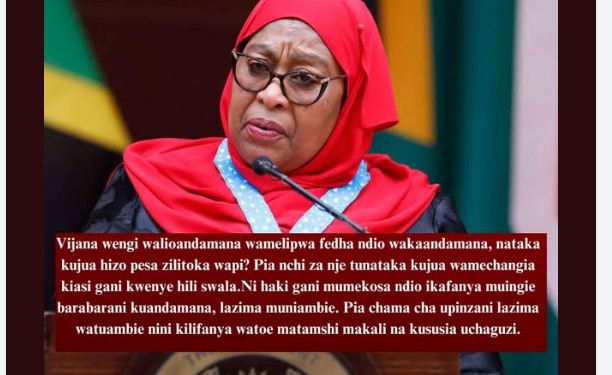
“Vijana wengi walioandamana wamelipwa fedha ndio wakaandamana, nataka kujua hizo pesa zilitoka wapi? Pia nchi za nje tunataka kujua wamechangia kiasi gani kwenye hili swala. Ni haki gani mumekosa ndio ikafanya muingie barabarani kuandamana, lazima muniambie. Pia chama cha upinzani lazima watuambie nini kilifanya watoe matamshi makali na kususia uchaguzi.”
In her comments, the President questioned both the sources of funding for the protests and whether foreign contributions may have influenced the demonstrations. She urged clarity on the specific grievances that drove young people to the streets, emphasizing that understanding these factors is essential for addressing public concerns responsibly.
President Samia also called on the opposition party to explain its role in recent political tensions. She specifically asked for clarification on provocative statements made by opposition leaders and their decision to boycott the election, suggesting that these actions may have contributed to unrest.
The President’s remarks have sparked mixed reactions online. Supporters praise her demand for accountability and transparency, arguing that protests influenced by financial incentives or political manipulation should be investigated. Critics, however, argue that her comments risk undermining citizens’ right to protest and could be seen as an attempt to delegitimize public dissent.
Analysts say Samia Suluhu’s statements reflect a broader challenge in Tanzanian politics: balancing freedom of expression and assembly with concerns about political mobilization, external interference, and national security. The government appears intent on identifying any external or internal actors who may have influenced the demonstrations while seeking explanations from opposition leaders.
With growing attention from both Tanzanians and neighboring countries, the statement underscores the high stakes surrounding youth activism, electoral politics, and the influence of foreign actors in shaping political events in the country.