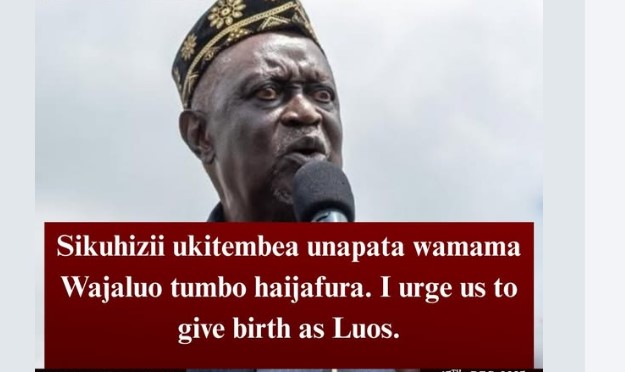
Siaya Senator Oburu Odinga has stirred public debate after urging Luo women to have more children, framing his remarks around concerns about declining birth rates within the community. Speaking candidly, Oburu observed that many Luo women today are having fewer children and called on the community to embrace childbirth as a way of sustaining their numbers and cultural continuity.
At the center of his remarks is a growing anxiety shared by some leaders across the country: changing lifestyles, economic pressures, and shifting social values are influencing family size. Oburu’s appeal reflects a traditional view that links population growth to cultural strength, political relevance, and community survival. From this perspective, having children is seen not just as a personal choice, but as a collective responsibility.
Supporters of Oburu’s message argue that his comments are rooted in concern for the future of the Luo community. They point to rising living costs, urbanization, and delayed marriages as factors contributing to lower birth rates. To them, encouraging family growth is about preserving identity, lineage, and social structures that have historically defined the community.
However, his remarks have also attracted criticism, particularly from women’s rights advocates and younger generations. Critics argue that decisions about childbirth are deeply personal and should not be influenced by political or cultural pressure. They contend that urging women to give birth without addressing economic realities—such as unemployment, healthcare costs, and access to childcare—oversimplifies a complex issue.
The controversy highlights a broader national and global conversation about reproductive choices. Across Kenya, many families are choosing to have fewer children due to financial constraints, career considerations, and changing priorities. Women, in particular, are increasingly asserting autonomy over their bodies and life choices, challenging traditional expectations tied to motherhood.
Oburu Odinga’s comments also raise questions about the role of leaders in discussing sensitive social matters. While community leaders often speak on cultural preservation, critics argue that such conversations must be handled carefully to avoid appearing to police women’s bodies or reduce their value to reproductive roles.
Ultimately, the debate sparked by Oburu Odinga’s remarks goes beyond the Luo community. It reflects the tension between tradition and modernity, collective identity and individual choice. As society evolves, conversations about family, culture, and population growth will continue—but they will need to balance cultural concerns with respect for personal freedom and economic reality.