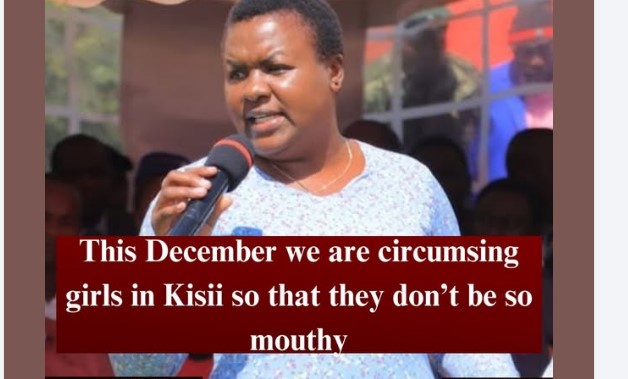
The Kisii Woman Representative has sparked national shock and condemnation after reportedly stating, “This December we are circumcising girls in Kisii so that they don’t be so mouthy.” Her remarks have drawn widespread criticism from human rights advocates, gender activists, and the general public, highlighting ongoing tensions surrounding cultural practices and children’s rights in Kenya.
Female genital mutilation (FGM) is illegal in Kenya under the Prohibition of Female Genital Mutilation Act, yet it remains a practice in some communities, often justified under the guise of cultural tradition. The Kisii MP’s statement reignited debate about the persistence of harmful practices and the need for strict enforcement of laws protecting girls. Critics argue that statements like hers normalize abuse and undermine national and international efforts to eradicate FGM.
Human rights organizations condemned the comments, emphasizing that such actions violate the rights of girls to health, education, and bodily integrity. They stressed that “circumcising girls to control their behavior” is not only illegal but morally indefensible. Advocates have called for immediate investigation and public accountability for the MP’s remarks.
Supporters of cultural preservation, however, argue that some traditions form an integral part of community identity. Even so, most acknowledge that government laws and human rights obligations take precedence, and that harmful practices must be abandoned or reformed to align with contemporary ethical standards.
The incident has reignited national conversations about protecting children from abuse, balancing cultural practices with legal frameworks, and ensuring that elected leaders do not encourage or condone illegal or harmful behavior. It also underscores the critical role of education and advocacy in changing mindsets that perpetuate gender-based violence.
Ultimately, the Kisii Woman Representative’s controversial remarks serve as a stark reminder of the ongoing struggle to end FGM in Kenya. The public outcry highlights the need for continuous vigilance, enforcement of the law, and societal dialogue to protect the rights and well-being of girls across the country.