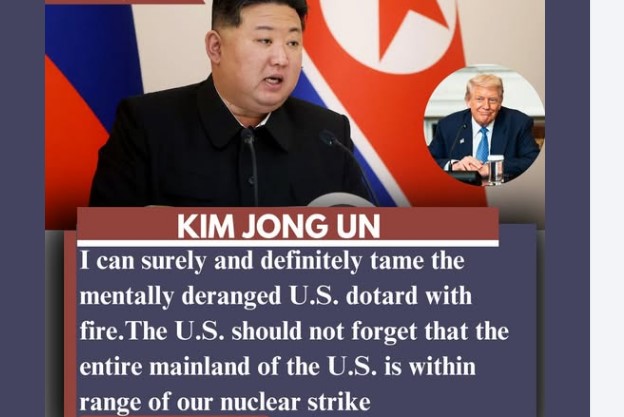
The war of words between Kim Jong Un and Donald Trump marked one of the most intense periods of diplomatic tension in recent history. When Kim declared that he could “surely and definitely tame the mentally deranged U.S. dotard with fire” and warned that the entire U.S. mainland was within range of North Korea’s nuclear strike, the statement sent shockwaves across the globe. It was not just an insult; it was a calculated political message rooted in power, deterrence, and survival strategy.
The language used by Kim was unusually harsh, even by the standards of international disputes. By referring to Trump as a “dotard,” a term meaning an old and foolish person, Kim aimed to undermine the American president’s authority while projecting strength to both domestic and international audiences. Such rhetoric reflected escalating tensions between Washington and Pyongyang at the time, especially as North Korea accelerated its ballistic missile tests and nuclear weapons development.
Beyond the insults, the most alarming part of the statement was the direct nuclear threat. North Korea has long sought to demonstrate that it possesses the capability to strike the United States with intercontinental ballistic missiles (ICBMs). By claiming that the “entire mainland” of America was within range, Kim was reinforcing his country’s deterrence posture. In nuclear strategy, deterrence is built on convincing adversaries that any attack would be met with devastating retaliation. For North Korea, these warnings are often framed as defensive measures meant to prevent what it perceives as U.S. hostility.
This confrontation unfolded amid heightened global anxiety. Military exercises between the United States and South Korea were viewed by Pyongyang as preparation for invasion, while Washington regarded North Korea’s missile launches as direct threats to international security. The exchange of fiery rhetoric increased fears of miscalculation—where words could spiral into unintended military action. Global markets reacted nervously, and diplomatic channels worked quietly behind the scenes to reduce the risk of escalation.
However, history shows that despite dramatic threats, both sides often return to dialogue. In subsequent years, unprecedented summits were held between the two leaders, signaling that even the harshest rhetoric can give way to negotiation when strategic interests align. These meetings demonstrated that international politics frequently involves a blend of confrontation and diplomacy.
The episode serves as a reminder of how powerful words can be in global politics. When nuclear-armed nations exchange threats, the consequences extend far beyond personal insults. They influence alliances, defense policies, and the overall stability of the international system. While such statements may be designed to project strength, they also underline the fragile balance that exists in a world where nuclear weapons remain a reality.