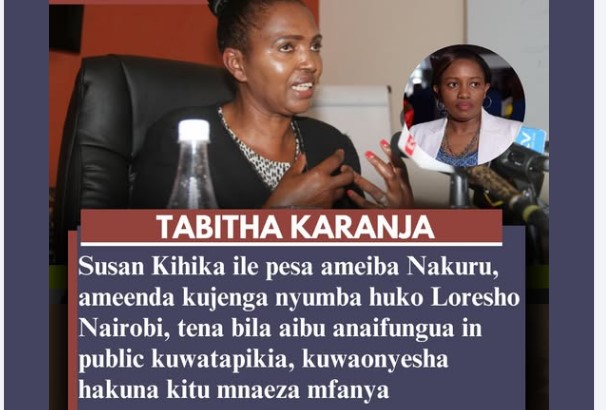
Allegations of corruption and misuse of public funds continue to fuel debate in Kenya, especially when high-profile politicians or business figures are implicated. Recently, attention has turned to claims that Tabitha Karanja, a prominent businesswoman, and Senator Susan Kihika are involved in questionable financial activities linked to Nakuru County. According to reports circulating online, funds allegedly diverted from Nakuru are being used for personal projects in Nairobi, including the construction of a house in Loresho, one of the city’s affluent neighborhoods.
The controversy has been intensified by claims that the house has been opened publicly, with Karanja reportedly hosting guests and displaying the property as if to demonstrate her success and influence. Such actions, if the allegations are true, raise concerns about transparency and accountability, particularly regarding the management of public resources. Critics argue that flaunting wealth allegedly obtained through misappropriated funds can erode public trust and reinforce perceptions of impunity among Kenya’s elite.
Public outrage is often amplified in cases where politicians or business leaders are perceived to benefit personally from resources intended for community development. Nakuru County, like many other regions, faces challenges that demand proper stewardship of funds, including infrastructure, healthcare, and education. Allegations that public money is being redirected for private gain naturally provoke frustration among residents, especially when such resources are sorely needed in local communities.
The situation also touches on broader discussions about accountability and governance in Kenya. Citizens increasingly demand that elected officials and influential figures demonstrate integrity in the management of public resources. Transparency measures, audits, and effective oversight mechanisms are critical in preventing misuse and ensuring that community development initiatives benefit their intended recipients.
At the same time, it is important to note that allegations must be thoroughly investigated before definitive conclusions are drawn. In a climate where political rivalry and public opinion can shape narratives, verifying claims through credible evidence and formal investigations is essential to ensure fairness and justice.
The ongoing debate over Tabitha Karanja and Susan Kihika highlights the delicate balance between wealth, public perception, and responsibility. Regardless of the outcome of any investigation, the situation underscores the need for ethical leadership and careful management of public funds to maintain trust between the government, influential figures, and the communities they serve.