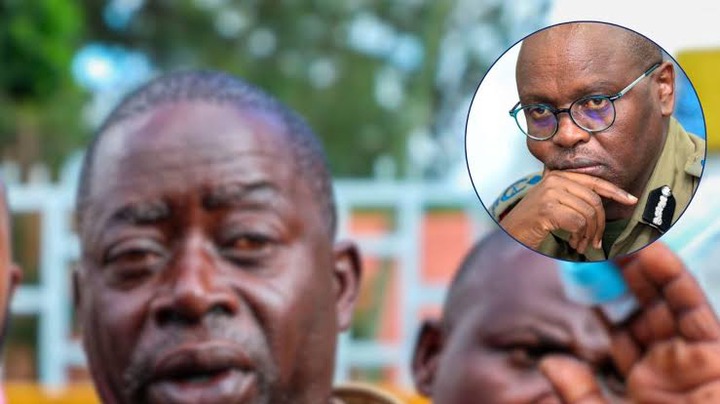
The pursuit of justice for the late Albert Ojwang has taken a dramatic and emotional turn after his father, Meshack Ojwang, filed a new affidavit accusing the Director of Public Prosecutions (DPP) of protecting Deputy Inspector General (DIG) Eliud Lagat from arrest and prosecution. In the affidavit, Meshack states that there is overwhelming evidence linking Lagat to the arrest, torture, and eventual killing of his son — evidence he claims the DPP has deliberately ignored.
Albert Ojwang, a 31-year-old teacher and outspoken social media commentator, died under mysterious and disturbing circumstances while in police custody. What began as a defamation complaint reportedly filed by DIG Lagat quickly escalated into a national outcry after Albert died following severe torture at the Central Police Station in Nairobi.
Meshack Ojwang’s affidavit accuses the DPP of failing to charge individuals who hold high ranks in the police service, despite the fact that junior officers have already been taken to court. According to him, the events that led to Albert’s death were not the actions of a few rogue officers — but a coordinated chain of decisions involving senior police leadership.
At the center of his claims is the allegation that Albert was moved from Mawego Police Station in Homa Bay County to Nairobi on the orders of top officials linked directly to DIG Lagat. The father argues that his son’s transfer had no legal justification and that it exposed him to deliberate harm. He insists that both the transfer and the torture that followed cannot be separated from the authority of the senior officers whose instructions were carried out without question.
The affidavit highlights a deep frustration shared by many Kenyans who have followed the case: junior officers are often prosecuted while their commanders remain untouched. Meshack argues that the DPP’s reluctance to arrest or question Lagat amounts to shielding someone who may have been central to the chain of actions that led to Albert’s death.
An autopsy earlier revealed that Albert suffered blunt force trauma, neck compression, and multiple soft-tissue injuries — injuries consistent with torture, not accidental harm. These findings fueled public outrage, prompting widespread calls for accountability that reached the highest levels of Kenya’s policing system. Despite this, only a handful of lower-ranking officers and civilians have faced charges.
The father’s new affidavit amplifies pressure on state agencies, demanding not only the prosecution of those directly involved but also a thorough investigation into the role of senior police officials. He insists that justice can only be meaningful if it reaches every level of responsibility — including those who allegedly gave the orders.
This case has become emblematic of a wider problem in Kenya: accountability gaps when powerful individuals are implicated in wrongdoing. The killing of Albert Ojwang has reignited conversations about police abuse, misuse of authority, and the tendency of institutions to protect those at the top.
For Meshack Ojwang, however, the fight is personal and deeply painful. “I want justice for my son,” he declares — a cry echoing across the country as more Kenyans demand that justice be delivered without fear, favor, or selective prosecution.
As the matter now moves into another critical phase, the ball is firmly in the DPP’s court. Will the office act on the new evidence and allegations? Or will this become yet another case where only the lowest-ranking officers take the fall while senior officials remain untouched?
The coming days will determine not just the course of this case, but the level of trust Kenyans can place in institutions meant to uphold justice.