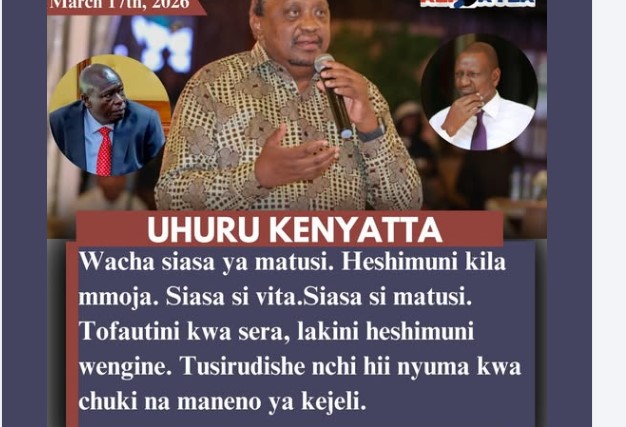
The message by Uhuru Kenyatta stands out as a call for sobriety and respect in Kenya’s increasingly heated political space. At a time when leaders frequently exchange insults and harsh rhetoric, his words push for a return to issue-based politics anchored on dignity and mutual respect.
By stating that “siasa si vita” and “siasa si matusi,” the former president emphasizes that politics should not be treated as a battleground of personal attacks. Instead, it should be a platform for presenting ideas, policies, and solutions that address the needs of citizens. When leaders resort to insults, the focus shifts away from development and governance, weakening the quality of public discourse.
His warning also touches on a deeper concern—national unity. Kenya’s history shows that divisive language, especially from influential figures, can fuel tension and deepen societal divisions. Encouraging leaders to “heshimuni kila mmoja” is not just about politeness; it is about safeguarding cohesion in a diverse nation.
At the same time, the call to “tofautini kwa sera” highlights the essence of democracy. Differences in opinion are healthy and necessary, but they should be expressed through constructive debate rather than hostility. Competing ideas, when presented respectfully, give citizens a clearer understanding of choices and help strengthen democratic institutions.
Ultimately, this message serves as a reminder that leadership goes beyond power and influence—it includes responsibility for tone, conduct, and the example set for the public. In a period where political temperatures are rising, such guidance reinforces the need for maturity, respect, and a focus on what truly matters: the progress and unity of the country.