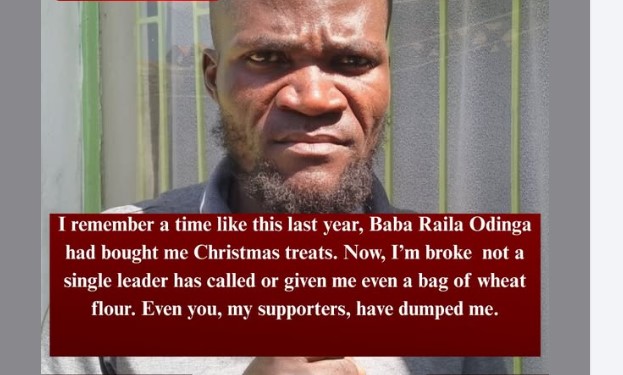
Political activist and outspoken ODM supporter Nuru Okanga has sparked fresh conversation after delivering an emotional reflection on how quickly political loyalty and support can fade. Speaking candidly, Okanga recalled a moment during the previous Christmas season when ODM leader Raila Odinga had personally supported him with festive treats, a gesture he says made him feel valued and remembered. One year later, however, he describes a very different reality marked by financial struggle and silence from those he once stood firmly behind.
According to Okanga, his frustration is not only about money but about abandonment. He lamented that despite his vocal support for political causes and leaders, he now finds himself struggling, with no calls, assistance, or even basic support such as food from political figures he once defended publicly. His words reflect a sense of betrayal and disappointment, revealing the emotional cost borne by grassroots supporters who invest heavily in political movements with the hope of long-term recognition or support.
Okanga also turned his frustration toward his supporters, accusing them of disappearing when he needed them most. This sentiment highlights a broader reality faced by many political activists whose relevance often depends on political seasons. When campaigns end and attention shifts elsewhere, individuals who once enjoyed public recognition can quickly be forgotten, left to navigate personal hardships alone.
His remarks have reignited debate about the treatment of political mobilizers and foot soldiers in Kenya’s political system. Many observers argue that while politicians benefit from the energy and loyalty of such supporters, there is often little structure in place to ensure their welfare once elections are over. Okanga’s situation has become a symbol of this imbalance, raising questions about accountability, gratitude, and responsibility within political movements.
Ultimately, Nuru Okanga’s statement serves as a sobering reminder of the fragile nature of political alliances. It exposes the gap between political promises and personal reality, illustrating how quickly admiration can turn into isolation. His experience underscores the need for more sustainable support systems for grassroots activists who play a critical role in shaping political narratives but are often left behind when the spotlight fades.