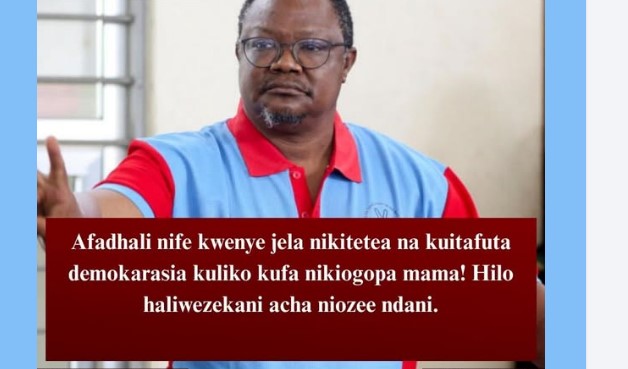
Tanzanian opposition figure Tundu Lissu has once again stirred political discussion after making a bold statement on sacrifice and democracy. In his remarks, Lissu declared that he would rather die in prison while defending and fighting for democracy than live in fear, insisting that surrendering out of fear is not an option for him. His words reflect a long-standing image of a politician who views personal sacrifice as necessary in the struggle for democratic space.
Lissu’s statement underscores the high personal cost that opposition politics can carry in many parts of Africa. By openly stating his willingness to face imprisonment, he positioned himself as a symbol of resistance against what he perceives as repression and intimidation. To his supporters, such remarks reinforce his reputation as a fearless advocate for democratic reforms and constitutionalism.
At the same time, his comments highlight a broader debate about governance, freedom, and the limits of state power. Critics argue that extreme rhetoric can escalate political tensions, while supporters counter that strong language is sometimes necessary to confront systems that suppress dissent. For Lissu, the choice he presents is clear: dignity and principle over comfort and fear.
The statement also speaks to a wider frustration among citizens who feel excluded from political decision-making. By framing his struggle as one for democracy rather than personal ambition, Lissu appeals to those who believe that meaningful change often demands courage and sacrifice from leaders.
As Tanzania and the region continue to navigate questions of democracy, rule of law, and political tolerance, Lissu’s words have reignited conversations about what leaders owe their supporters and what risks they should be willing to take. Whether one agrees with his approach or not, his declaration has once again placed the issue of democratic freedom at the center of public discourse.