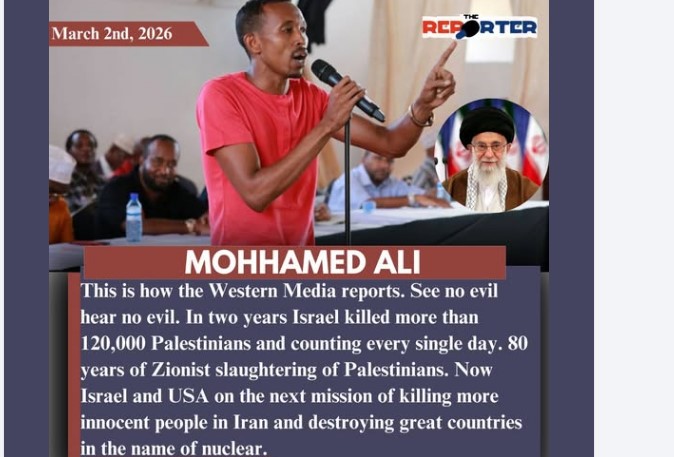
The remarks attributed to Jicho Pevu reflect a deeply critical view of Western media coverage of the Middle East conflict, particularly regarding Israel, Palestine, and rising tensions involving Iran. Such statements capture the anger and frustration felt by many observers who believe global narratives are shaped by political interests rather than humanitarian realities.
At the heart of the argument is the accusation that Western media outlets underreport or selectively frame Palestinian suffering. Since the escalation of the Gaza war in October 2023, tens of thousands of Palestinians have been killed, according to figures released by Gaza health authorities and cited by international organizations. The scale of destruction and loss of civilian life has triggered global protests, diplomatic tensions, and growing calls for accountability. Critics argue that some Western outlets focus heavily on security concerns of Israel while giving comparatively less emotional weight to Palestinian casualties. Supporters of Western reporting, however, contend that major media organizations do cover civilian suffering on both sides but operate within complex political and security contexts.
The broader historical claim of “80 years” of conflict points back to the creation of the State of Israel in 1948 and the long-running Israeli-Palestinian struggle over land, sovereignty, and national identity. Decades of wars, uprisings, peace negotiations, and failed agreements have left deep scars across generations. Both Israelis and Palestinians view their histories through narratives of survival and injustice, making the conflict one of the most emotionally charged in modern geopolitics.
The reference to the United States and Israel allegedly targeting Iran “in the name of nuclear” reflects wider regional anxieties. Iran’s nuclear program has long been a point of contention between Tehran, Washington, and Jerusalem. Israel considers a nuclear-armed Iran an existential threat, while Iran maintains that its nuclear activities are for civilian purposes. Periodic escalations—whether through sanctions, proxy conflicts, or military exchanges—fuel fears of a broader regional war that could destabilize the Middle East even further.
It is important to separate verified facts from emotionally charged rhetoric. Casualty figures, military actions, and diplomatic developments are documented by international bodies, humanitarian organizations, and multiple news agencies. However, political language often amplifies grievances and frames events in moral absolutes—good versus evil, silence versus truth. Such framing resonates strongly with audiences but may oversimplify complex realities.
The debate over media bias is not new. Around the world, audiences question whether coverage is balanced, influenced by geopolitical alliances, or shaped by editorial priorities. In conflicts involving powerful nations, perceptions of bias become even more intense. Social media has further transformed the information landscape, allowing alternative voices to challenge mainstream narratives while also spreading unverified claims.
Ultimately, the Israel-Palestine conflict and the broader Middle East tensions remain deeply complex, rooted in history, identity, security concerns, and competing political visions. Strong opinions are inevitable, especially when civilian lives are at stake. Yet meaningful dialogue requires careful attention to verified information, acknowledgment of human suffering on all sides, and a commitment to seeking peaceful solutions rather than escalating hostility.