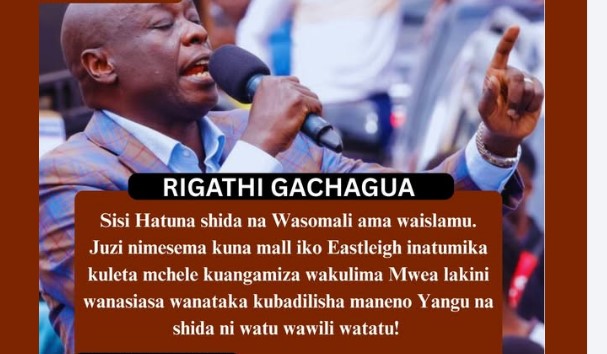
Rigathi Gachagua’s recent remarks on rice imports have sparked public debate after some politicians attempted to frame his comments as ethnic or religious in nature. Gachagua has firmly clarified that he has no problem with Somalis or Muslims, stating that his message was deliberately misrepresented for political convenience.
According to Gachagua, his original statement focused on allegations that a mall in Eastleigh is being used to import rice in a manner that undermines local farmers, particularly those in Mwea. He emphasized that his concern was economic, not communal, and that the issue involves a few individuals engaging in unfair trade practices rather than any entire community.
He argues that instead of addressing the real problem—illegal or unfair importation of rice that hurts Kenyan farmers—some politicians have chosen to distort his words to stir ethnic and religious tension. Gachagua maintains that this approach shifts attention away from accountability and economic justice, which should be the priority.
The former deputy president believes such political tactics are dangerous, as they weaken national unity and derail meaningful discussions about protecting local industries. Farmers in Mwea rely heavily on fair market conditions, and unchecked imports threaten their livelihoods and the broader agricultural economy.
In conclusion, Gachagua’s clarification highlights the need for honest political discourse. He calls on leaders to stop exploiting sensitive social identities for political gain and instead focus on safeguarding the interests of ordinary Kenyans. His remarks underline that the real issue is economic integrity and support for local farmers, not ethnicity or religion.